Vaccination Schedule for Dogs and Cats: What Every Owner Should Know
Introduction
Vaccinations are one of the most effective tools in preventive pet healthcare. They protect pets from highly contagious and potentially fatal diseases. Despite this, many owners feel confused about which vaccines are necessary, when to give them, and how often boosters are required.
This guide explains dog and cat vaccination schedules clearly and responsibly, helping you make informed decisions without fear or confusion.
Why Vaccinations Matter
Vaccines:
- Prevent life-threatening diseases
- Reduce disease spread
- Protect vulnerable pets
- Support community health
Many pet diseases have no cure—prevention is the only protection.
Core vs Non-Core Vaccines
Core Vaccines
Recommended for all pets, regardless of lifestyle.
Dogs (Core):
- Rabies
- Distemper
- Parvovirus
- Adenovirus
Cats (Core):
- Rabies
- Feline panleukopenia
- Feline herpesvirus
- Feline calicivirus
Non-Core Vaccines
Given based on:
- Lifestyle
- Location
- Exposure risk
Examples:
- Kennel cough (dogs)
- Feline leukemia (cats)
Puppy and Kitten Vaccination Schedule
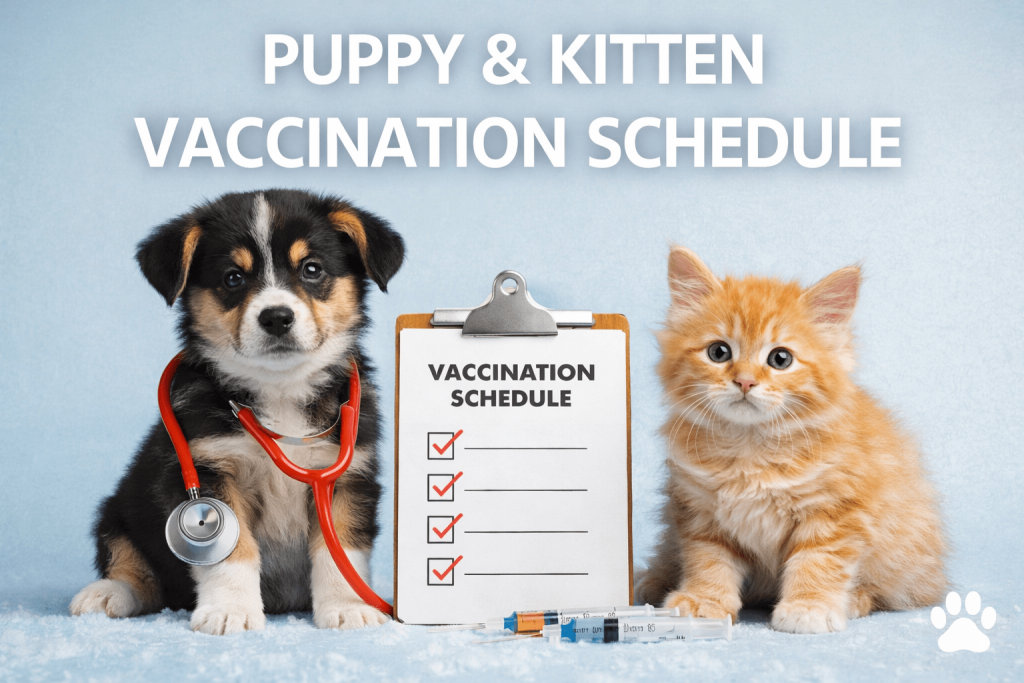
Puppies
- 6–8 weeks: First core vaccines
- Every 3–4 weeks until 16 weeks
- Rabies as per local law
Kittens
- 6–8 weeks: First core vaccines
- Boosters until 16 weeks
- Rabies per regulation
Early vaccination protects developing immune systems.
Adult Pet Booster Schedule
Most adult pets need:
- Annual or triennial boosters
- Rabies boosters as required by law
Your vet determines the safest schedule.
Are Vaccines Safe?
Modern vaccines are highly tested.
Mild side effects may include:
- Temporary lethargy
- Mild swelling at injection site
Serious reactions are rare but require immediate vet attention.
Common Vaccination Myths
❌ “Indoor pets don’t need vaccines”
❌ “Natural immunity is enough”
❌ “Vaccines cause illness”
These myths put pets at risk.
Vaccinations and Senior Pets
Older pets still benefit from vaccination, though schedules may be adjusted.
Health assessment before vaccination is essential.
Keeping Vaccination Records
Always keep:
- Vaccination certificates
- Booster dates
- Vet contact details
Records are required for travel, boarding, and emergencies.
🎥 YouTube Video Suggestion:
Conclusion
Vaccinations are a responsible and loving choice. They protect not only your pet but the wider pet community. Following a proper schedule ensures a longer, healthier life.