Wet Food vs Dry Food for Pets: Which Is Better and Why?
Introduction
One of the most debated topics in pet nutrition is whether wet food or dry food is better. Pet owners often feel pressured to choose one side, but the truth is more nuanced. Both wet and dry foods have advantages and limitations, and the best choice depends on your pet’s age, health, lifestyle, and individual preferences.
This comprehensive guide explains the real differences between wet and dry pet food, helping you make a confident, informed decision for your dog or cat.
Understanding Wet and Dry Pet Food
What Is Dry Food?
Dry food (kibble) is cooked, dehydrated, and formed into pellets. It is shelf-stable and widely used.
What Is Wet Food?
Wet food contains significantly higher moisture content and is typically sold in cans or pouches.
Both types are nutritionally complete when properly formulated.
Nutritional Differences Explained
The biggest difference is moisture content.
- Dry food: ~10% moisture
- Wet food: ~70–80% moisture
This affects hydration, calorie density, and feeding volume.
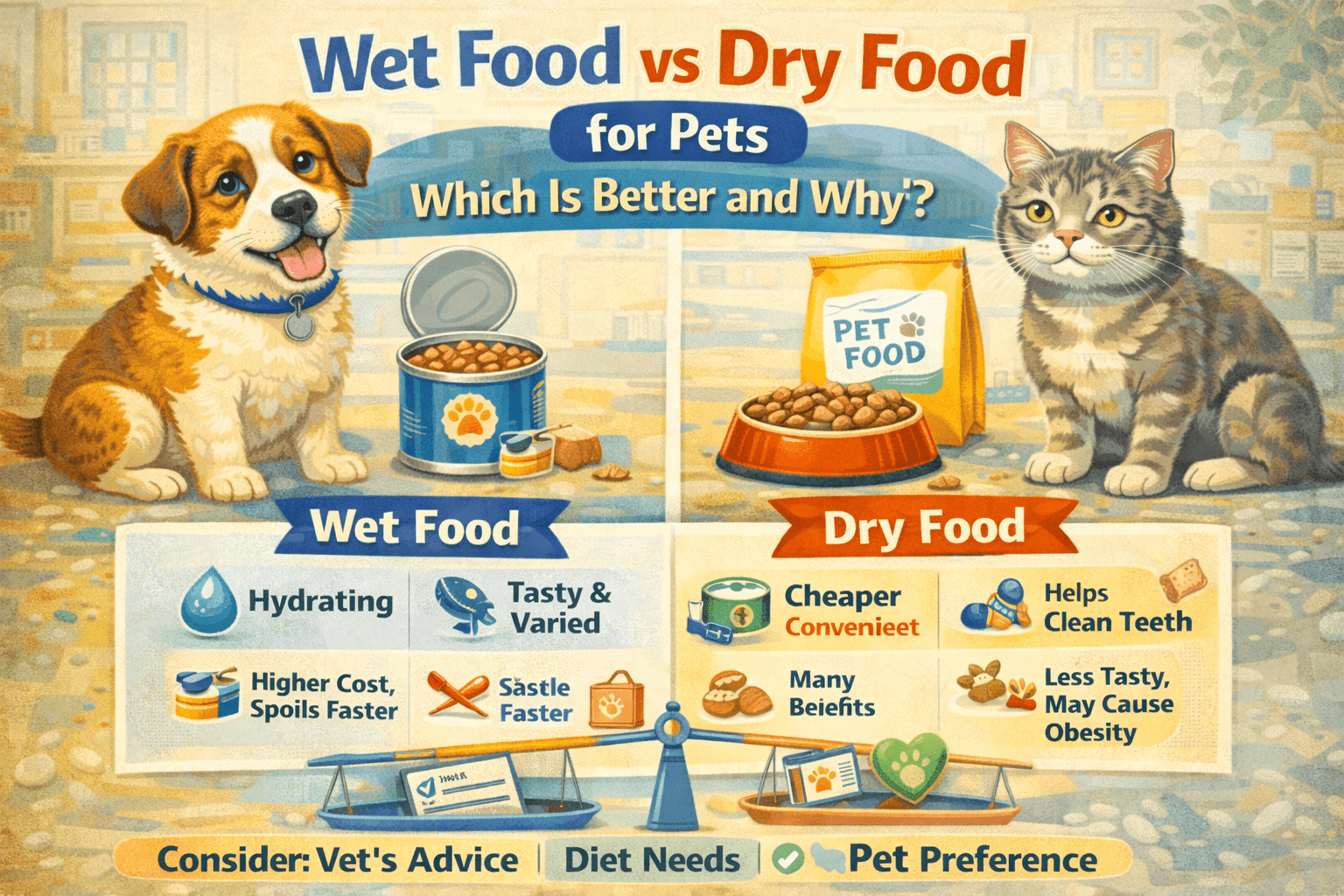
Benefits of Dry Food
Convenience and Cost
Dry food is:
- Easier to store
- More affordable long-term
- Less messy
It works well for busy owners.
Dental Benefits (With Limits)
Some dry foods help reduce plaque buildup, though they do not replace dental care.
Portion Control
Kibble makes it easier to measure exact portions, helping with weight management.
Benefits of Wet Food
Improved Hydration
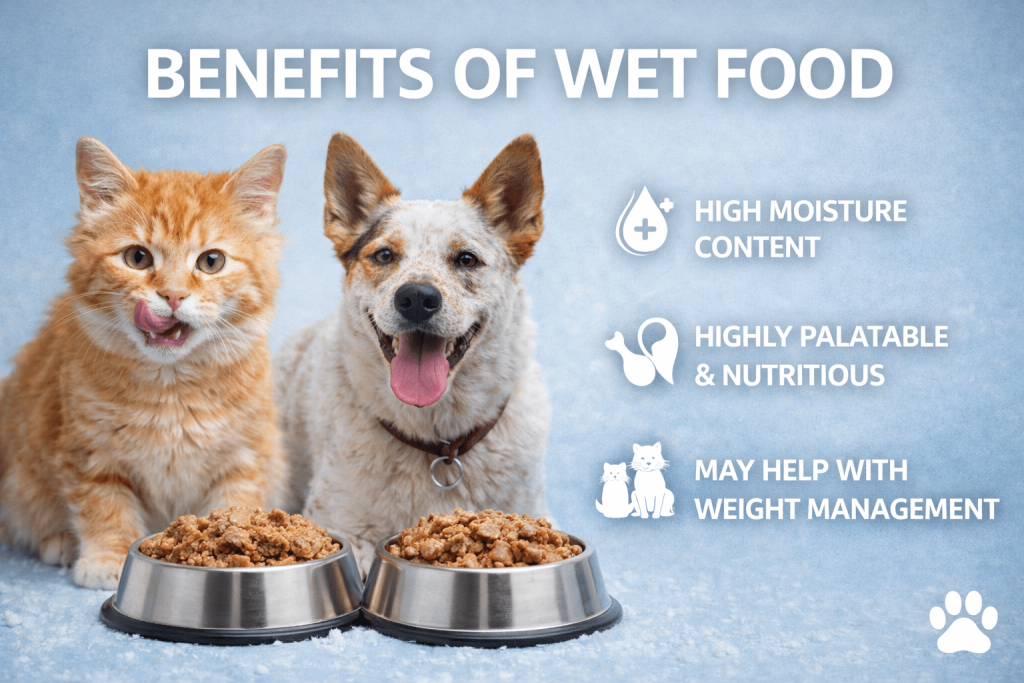
Wet food supports hydration, especially important for cats, who naturally drink less water.
Higher Palatability
Wet food is often more appealing to picky eaters, seniors, or pets recovering from illness.
Easier Digestion
Soft texture benefits pets with:
- Dental problems
- Sensitive digestion
Potential Drawbacks
Dry Food Cons
- Lower moisture
- Easier to overfeed
- May contribute to dehydration in cats
Wet Food Cons
- Higher cost
- Short shelf life after opening
- May contribute to dental plaque if oral care is ignored
Which Is Better for Dogs?
Dogs can thrive on either diet.
Dry food works well for:
- Healthy adult dogs
- Weight management
Wet food is beneficial for:
- Senior dogs
- Dogs with dental issues
A combination diet is often ideal.
Which Is Better for Cats?
Cats benefit greatly from wet food due to hydration needs.
Many vets recommend:
- Primarily wet food
- Or mixed feeding
This helps reduce urinary tract issues.
Mixed Feeding: The Best of Both Worlds
Combining wet and dry food provides:
- Hydration
- Texture variety
- Portion control
Consistency and portion balance are key.
Choosing High-Quality Food
Regardless of type:
- Look for named animal protein
- Avoid fillers and artificial additives
- Choose species-appropriate formulas
🎥 YouTube Video Suggestion:
Conclusion
There is no universal “best” choice. The right diet depends on your pet’s needs. Balanced nutrition, proper portions, and hydration matter more than food format alone.