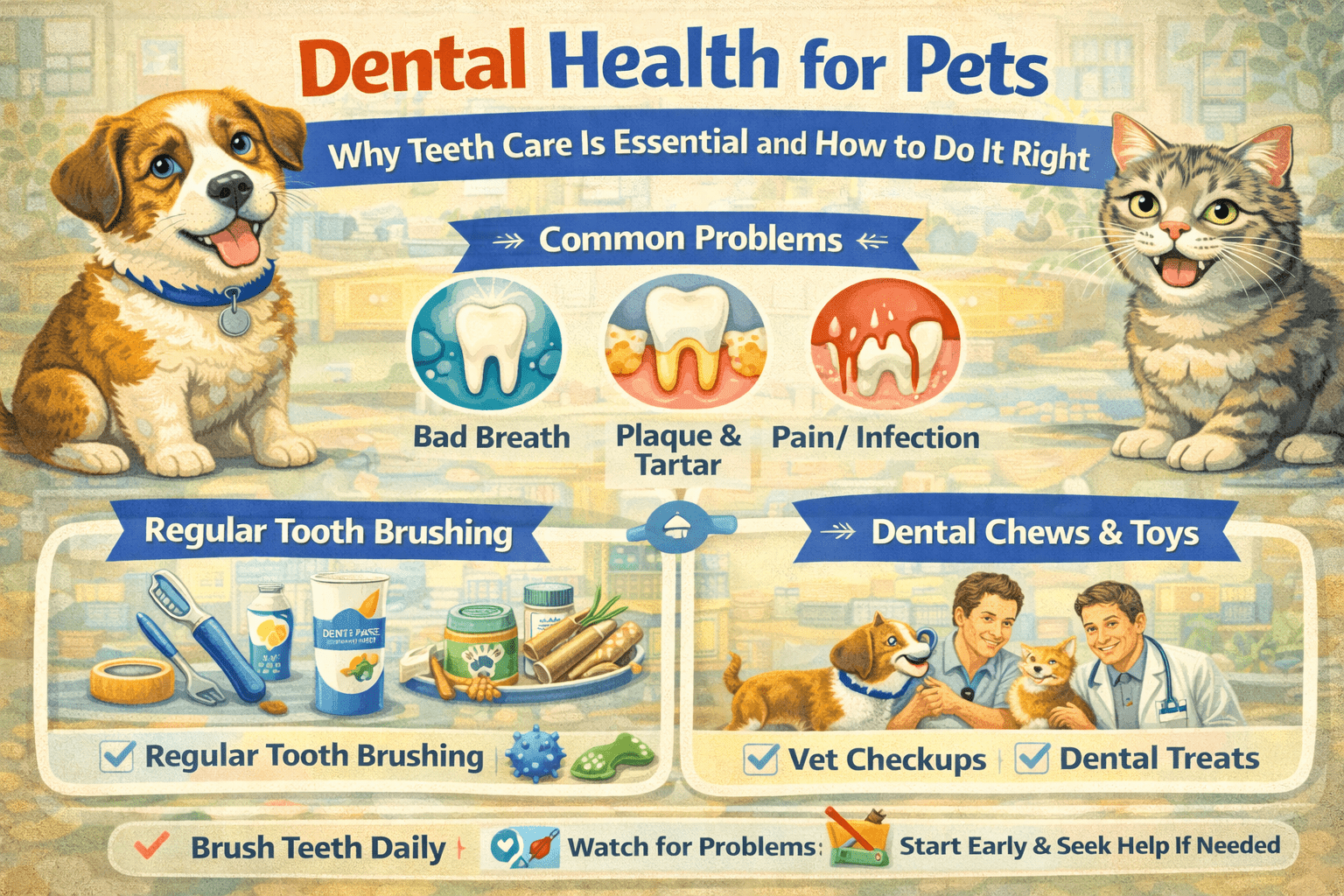
Dental Health for Pets: Why Teeth Care Is Essential and How to Do It Right
Introduction
Dental health is one of the most overlooked areas of pet care. Many owners assume bad breath is normal or that dental problems only affect older pets. In reality, dental disease can begin as early as three years of age and can silently damage your pet’s health long before obvious symptoms appear.
This comprehensive guide explains why dental care is essential for pets, common dental problems, and how to maintain healthy teeth at home—without stress or fear.
Why Dental Health Matters More Than You Think
Your pet’s mouth is a gateway to the rest of their body. When dental disease is left untreated, bacteria can enter the bloodstream and affect vital organs.
Poor dental health is linked to:
- Heart disease
- Kidney damage
- Liver problems
- Chronic pain
- Reduced lifespan
Dental care is not cosmetic—it is preventive healthcare.
Common Dental Problems in Pets
Plaque and Tartar Buildup
Plaque forms when bacteria mix with food particles. If not removed, it hardens into tartar.
Effects include:
- Bad breath
- Gum inflammation
- Tooth decay
Gingivitis
Gingivitis is inflammation of the gums.
Signs:
- Red or swollen gums
- Bleeding during chewing
- Sensitivity around the mouth
Early gingivitis is reversible with proper care.
Periodontal Disease
This is the most serious dental condition in pets.
Consequences:
- Tooth loss
- Bone damage
- Chronic pain
- Systemic infections
By the time severe symptoms appear, damage is often advanced.
Signs Your Pet May Have Dental Problems
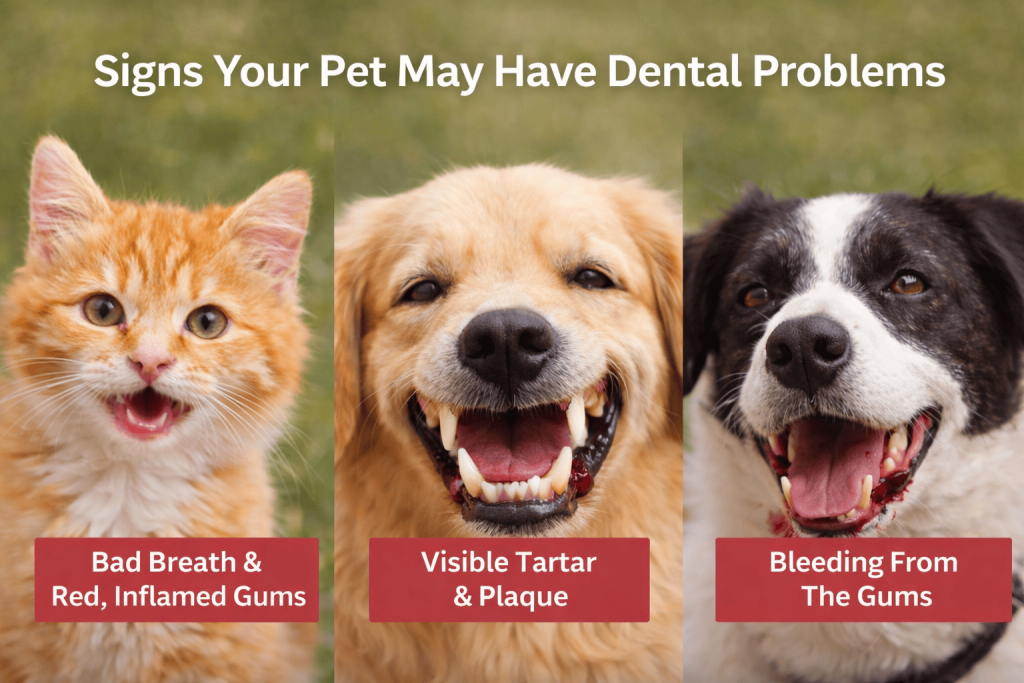
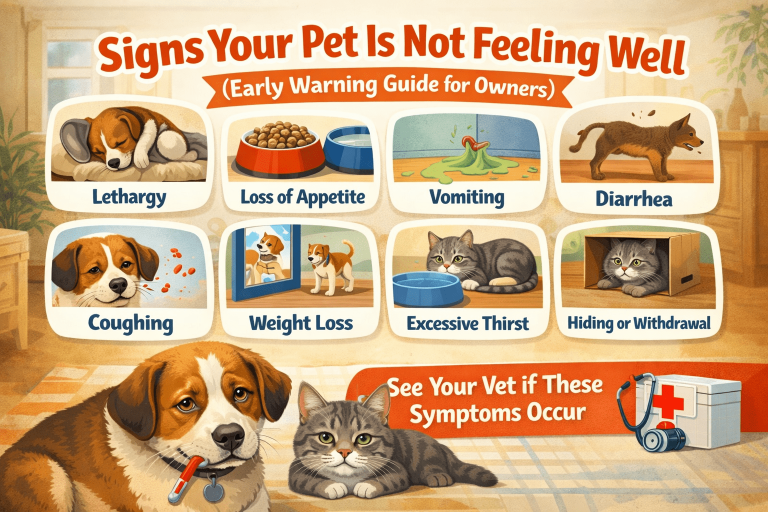
Watch for:
- Persistent bad breath
- Difficulty eating
- Dropping food
- Pawing at the mouth
- Excessive drooling
- Behavioral changes
Cats often hide pain, making dental issues harder to detect.
How Often Should You Clean Your Pet’s Teeth?
Ideally:
- Daily brushing is best
- 3–4 times per week is acceptable
Consistency matters more than perfection.
How to Brush Your Pet’s Teeth Safely
Choose the Right Tools
- Pet-specific toothbrush or finger brush
- Pet-safe toothpaste (never human toothpaste)
Human toothpaste contains toxic ingredients for pets.
Step-by-Step Brushing Guide
- Start slowly—let your pet smell the tools
- Touch gums gently before brushing
- Brush in small circular motions
- Focus on the outer surfaces
- Keep sessions short and positive
Reward after every session.
Alternatives to Brushing (When Needed)
While brushing is best, alternatives can help:
- Dental chews
- Dental diets
- Water additives
- Dental wipes
These should support, not replace, brushing.
Professional Dental Cleanings
Veterinary dental cleanings:
- Remove deep tartar
- Allow full oral examination
- May require anesthesia
Frequency depends on your pet’s condition and breed.
Dental Care Differences: Dogs vs Cats
Dogs:
- More tolerant of brushing
- Higher chewing-related wear
Cats:
- More sensitive mouths
- Greater risk of hidden dental disease
Cats benefit greatly from early dental routines.
Common Dental Care Mistakes
- Waiting for bad breath
- Using human toothpaste
- Avoiding brushing entirely
- Skipping vet dental checks
Early prevention saves money and pain.
🎥 YouTube Video Suggestion:
Conclusion
Healthy teeth mean a healthier pet. Dental care is one of the most impactful—and preventable—areas of pet health. A few minutes a week can add years of comfort and quality to your pet’s life.