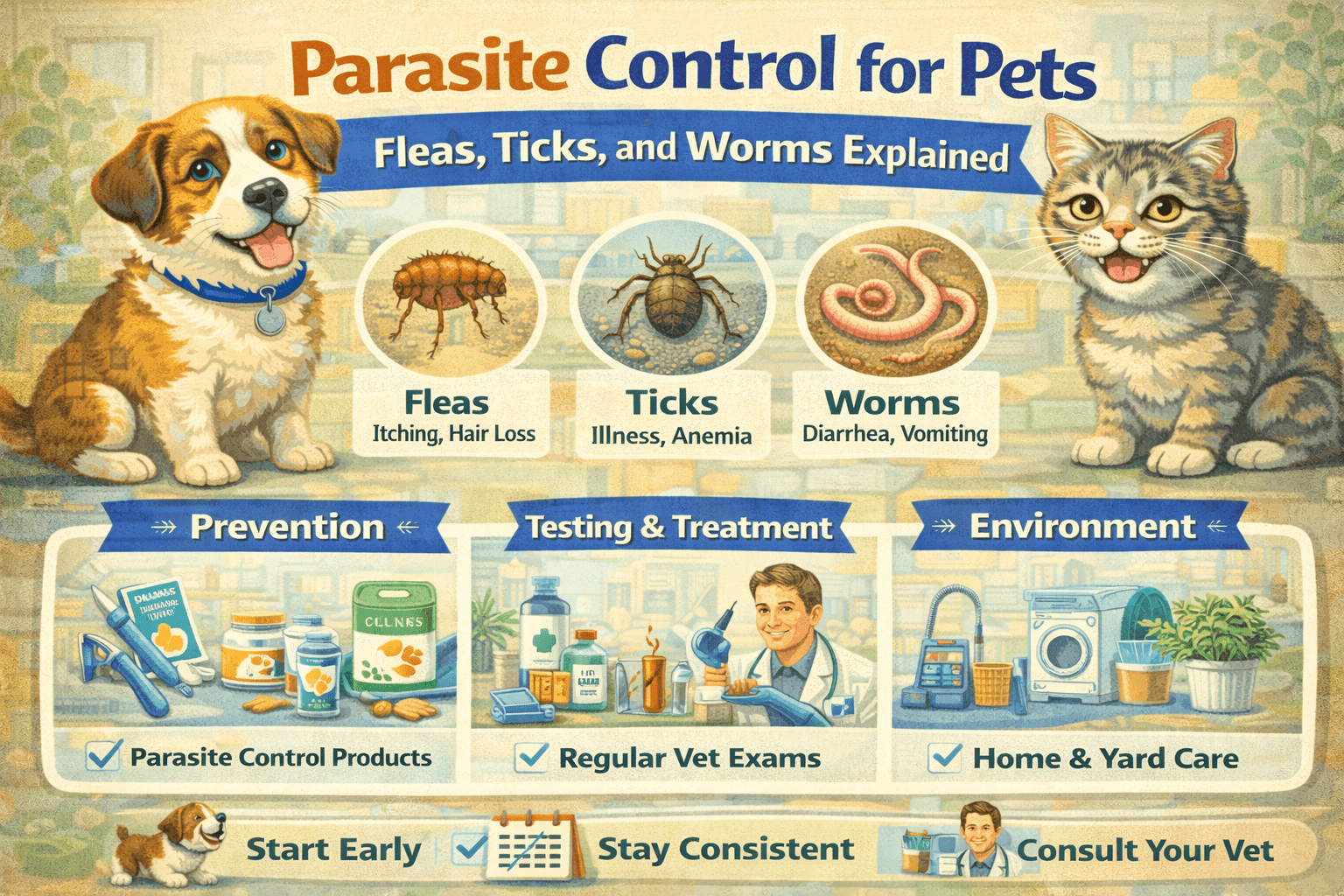
Parasite Control for Pets: Fleas, Ticks, and Worms Explained
Introduction
Parasites are more than just a nuisance—they are a serious health threat to pets and humans alike. Fleas, ticks, and internal worms can cause discomfort, transmit disease, and even become life-threatening if left untreated.
This guide explains the most common parasites affecting pets, how they spread, and how to protect your dog or cat safely and effectively.
Why Parasite Control Is Essential
Parasites can:
- Cause skin infections and anemia
- Transmit dangerous diseases
- Affect internal organs
- Spread to other pets and humans
Year-round prevention is far safer than treatment after infestation.
Fleas: Small Parasites, Big Problems
How Fleas Affect Pets
Fleas feed on blood and multiply rapidly.
Common signs:
- Intense scratching
- Hair loss
- Red, irritated skin
- Flea dirt (black specks)
Severe infestations can cause anemia, especially in young pets.
Flea-Borne Diseases
Fleas can transmit:
- Tapeworms
- Bacterial infections
- Allergic dermatitis
Flea allergy is one of the most common skin conditions in pets.
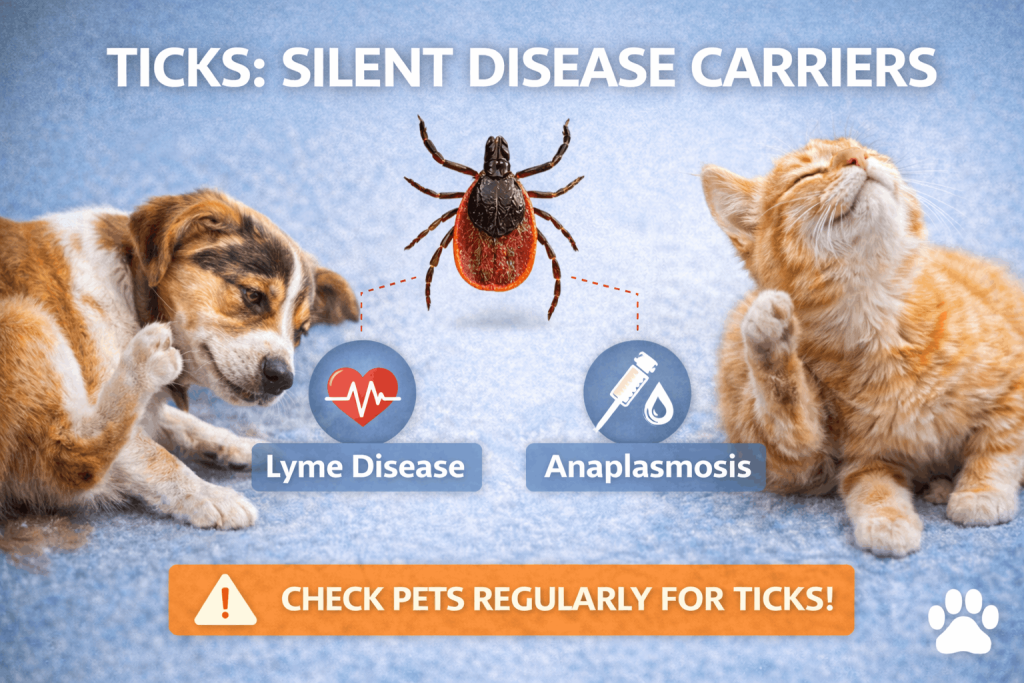
Ticks: Silent Disease Carriers
Why Ticks Are Dangerous
Ticks attach firmly and feed for days.
They can transmit:
- Lyme disease
- Ehrlichiosis
- Babesiosis
Early removal reduces disease risk.
Where Ticks Are Found
- Tall grass
- Wooded areas
- Gardens and parks
Even indoor pets can be exposed.
Internal Parasites (Worms)
Common Types
- Roundworms
- Hookworms
- Tapeworms
- Heartworms
Some worms can infect humans, especially children.
Signs of Internal Parasites
- Weight loss
- Diarrhea
- Vomiting
- Pot-bellied appearance
- Lethargy
Many pets show no symptoms until infestation is severe.
How Parasites Spread
- Contact with infected animals
- Flea ingestion
- Contaminated soil or feces
- Mosquito bites (heartworm)
Prevention requires multiple strategies.
Parasite Prevention Methods
Vet-Approved Preventatives
Options include:
- Topical treatments
- Oral medications
- Collars
Your veterinarian can recommend the safest option.
Environmental Control
- Wash bedding regularly
- Vacuum carpets and furniture
- Treat outdoor areas if necessary
Parasite control must include the environment.
Parasite Prevention for Cats
Indoor cats are not parasite-free.
Cats need:
- Flea prevention
- Deworming as advised
- Safe, cat-specific products
Never use dog parasite products on cats.
Common Parasite Control Mistakes
- Seasonal treatment only
- Skipping doses
- Using incorrect products
- Treating pets but not environment
Consistency is critical.
🎥 YouTube Video Suggestion:
Conclusion
Parasite control is a year-round responsibility. With consistent prevention, pets can stay comfortable, healthy, and protected from serious diseases.