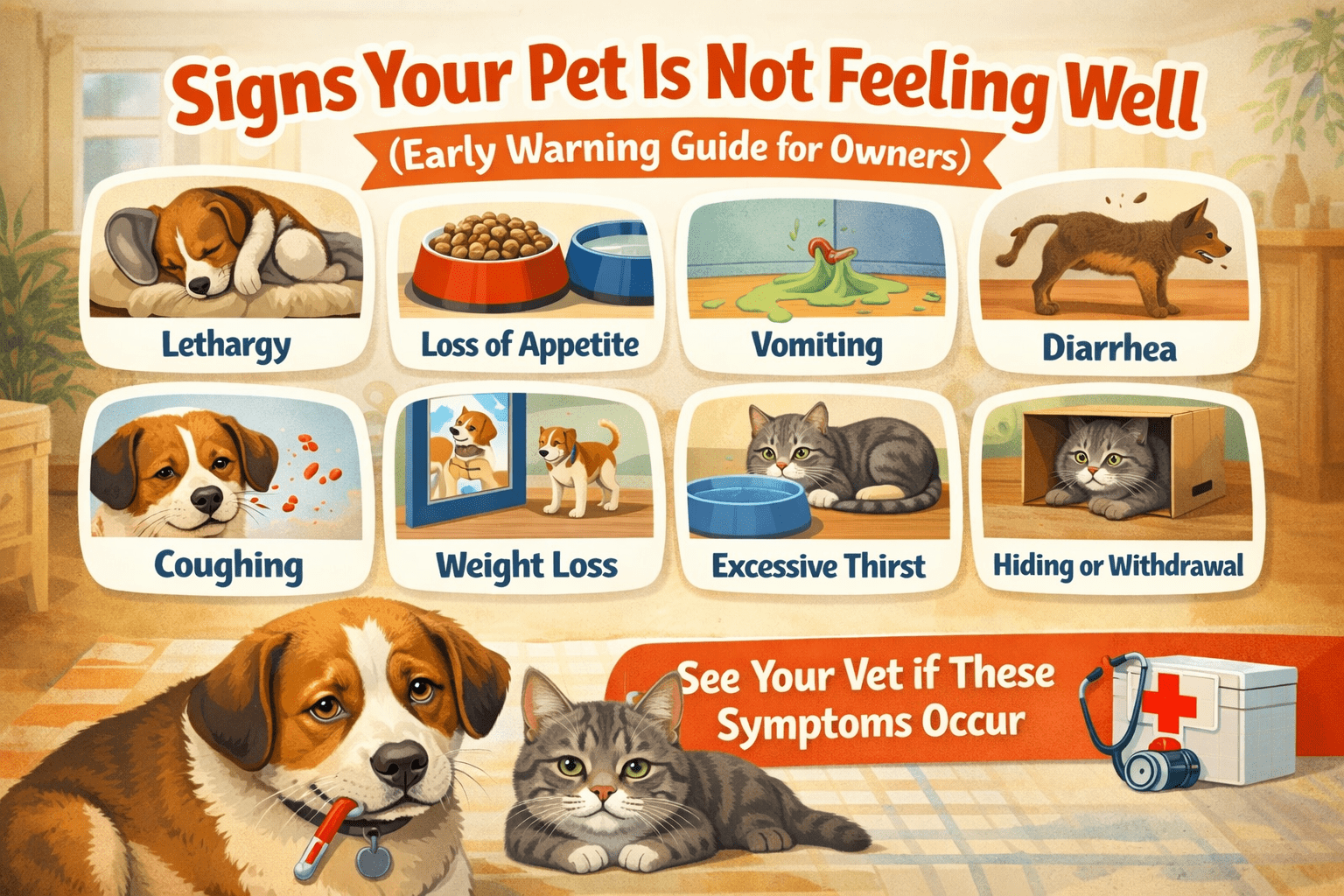
Signs Your Pet Is Not Feeling Well (Early Warning Guide for Owners)
Introduction
Pets cannot speak, but they communicate constantly through behavior, posture, and routine changes. Many serious pet health problems start with small, easily overlooked signs.
Understanding early warning symptoms allows owners to seek care before conditions become severe—or life-threatening.
Why Early Detection Is Critical
Early diagnosis:
- Reduces treatment costs
- Prevents suffering
- Improves recovery chances
- Extends lifespan
Most pet emergencies begin with ignored warning signs.
Changes in Appetite and Thirst
Reduced Appetite
Skipping one meal may not be serious, but continued refusal can signal:
- Dental pain
- Digestive disorders
- Infection
- Stress
Increased Thirst
Excessive drinking may indicate:
- Kidney disease
- Diabetes
- Hormonal imbalances
Always note changes lasting more than 24 hours.
Behavioral Changes You Should Never Ignore
Pets often show illness through behavior first.
Common signs include:
- Lethargy or weakness
- Hiding (especially in cats)
- Aggression or irritability
- Unusual vocalization
A normally friendly pet becoming withdrawn is a red flag.
Physical Symptoms That Signal Illness
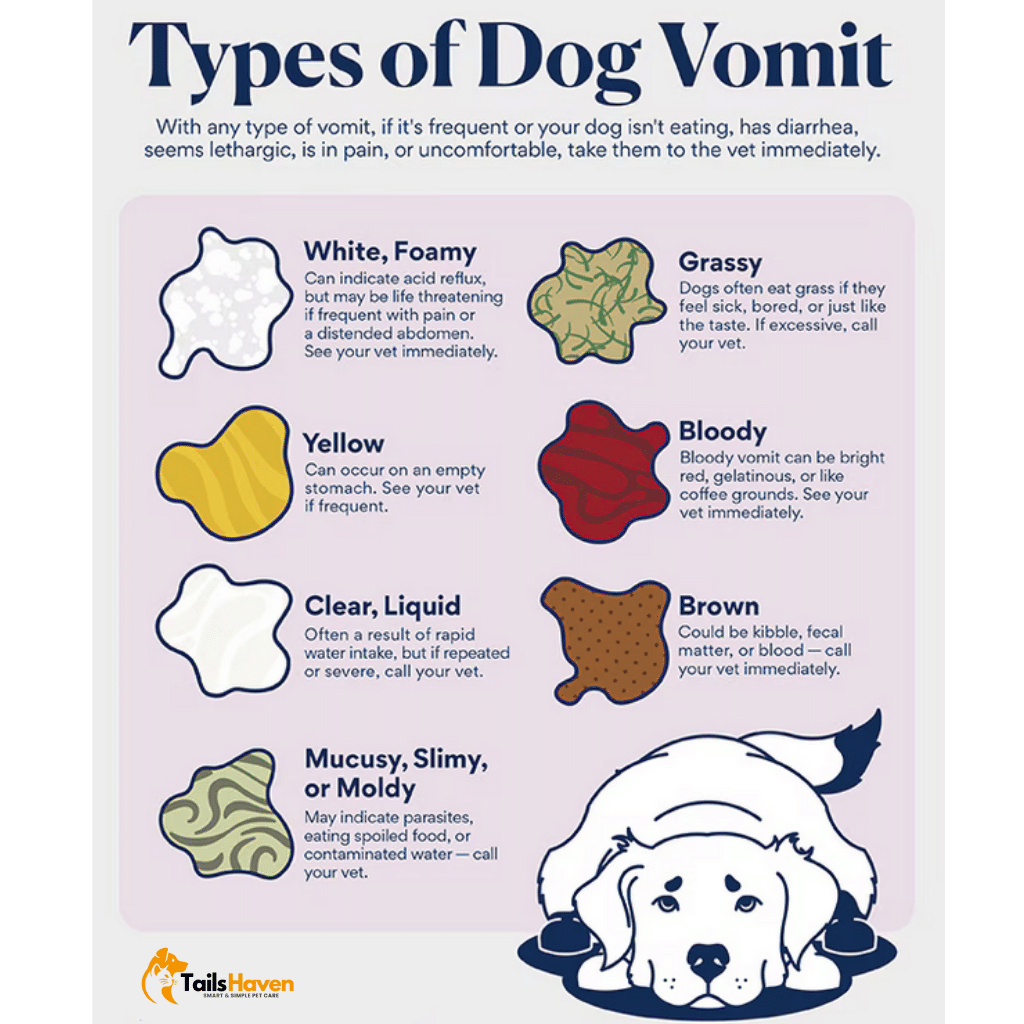
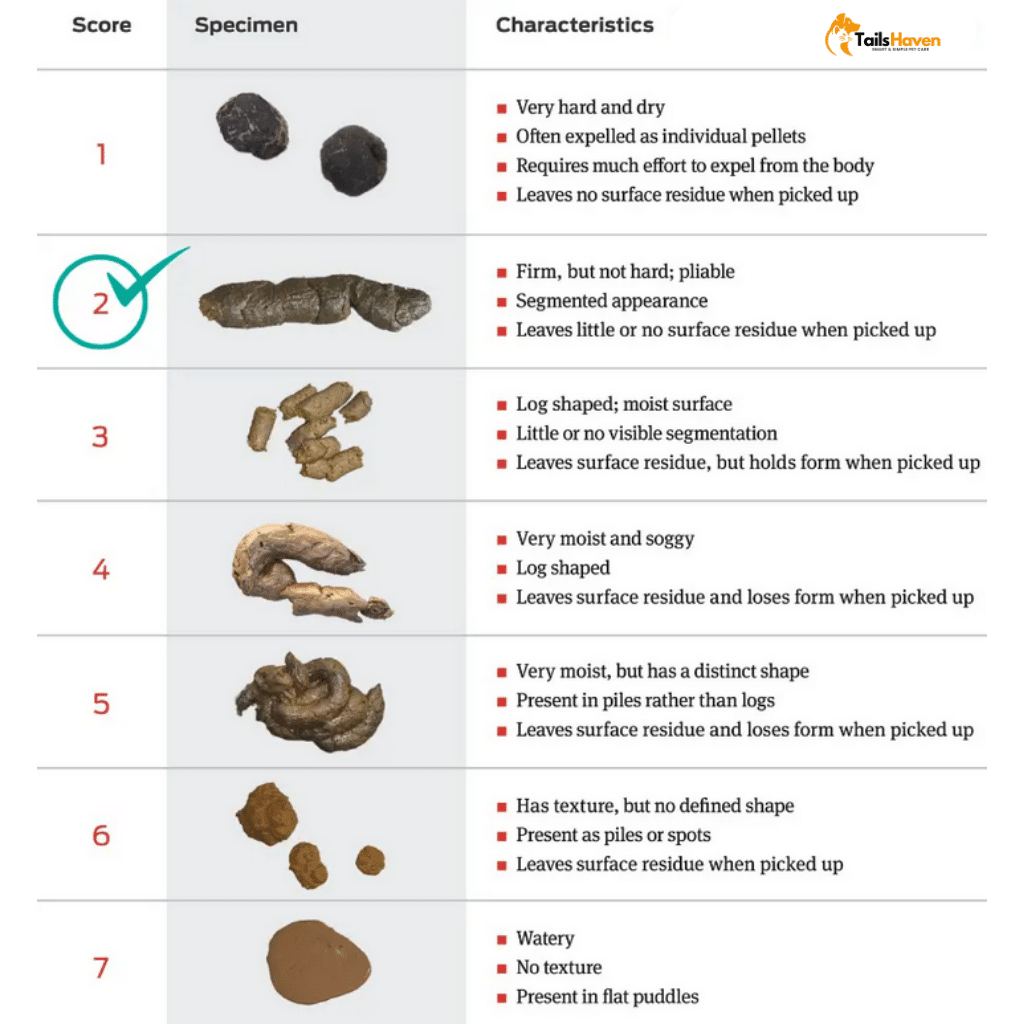
Watch closely for:
- Vomiting or diarrhea
- Limping or stiffness
- Coughing or labored breathing
- Eye or nose discharge
- Bad breath or drooling
These symptoms may indicate infections, injuries, or chronic disease.
Skin, Coat, and Weight Changes
A healthy pet has:
- Shiny coat
- Clear skin
- Stable weight
Warning signs include:
- Excessive shedding
- Hair loss
- Itching or redness
- Sudden weight gain or loss
Skin issues often reflect internal problems.
Urination and Litter Box Changes
Changes in bathroom habits are serious warning signs:
- Straining to urinate
- Blood in urine
- Frequent accidents
- Avoiding the litter box
Urinary issues require immediate attention.
When to Seek Veterinary Care Immediately
Contact a veterinarian urgently if your pet experiences:
- Difficulty breathing
- Continuous vomiting
- Seizures
- Collapse or extreme weakness
- Sudden paralysis
Do not wait in these cases.
How Daily Observation Saves Lives
Spending just a few minutes daily observing:
- Eating habits
- Energy level
- Bathroom behavior
Can help you detect illness early.
🎥 YouTube Video Suggestion:
Conclusion
Your pet depends on you to notice when something is wrong. Trust your instincts. Early action can prevent suffering and save your pet’s life.