Dog Food vs Cat Food: Key Differences Every Pet Owner Must Understand
Introduction
Many pet owners assume that dog food and cat food are interchangeable. After all, both are commercial pet foods designed to support animal health. However, this assumption can lead to serious nutritional imbalances and long-term health problems.
Dogs and cats have fundamentally different biological and nutritional needs. Feeding the wrong type of food—especially over a long period—can cause nutrient deficiencies, obesity, organ damage, and digestive disorders. This guide explains the key differences between dog food and cat food so you can make safe, informed feeding decisions.
Understanding the Biological Difference Between Dogs and Cats
Dogs are omnivores, meaning they can digest both plant-based and animal-based foods. Cats, on the other hand, are obligate carnivores. Their bodies are designed to rely almost entirely on animal protein.
This biological difference is the foundation of why their food formulations are not the same.
Protein Requirements: The Biggest Difference
Protein is the most critical nutrient where dog food and cat food differ.
Cat Protein Needs
Cats require:
- Very high levels of animal protein
- Essential amino acids such as taurine, arginine, and methionine
Cats cannot produce taurine naturally. Without it, they can develop:
- Heart disease
- Vision loss
- Reproductive issues
Cat food is specially fortified to meet these needs.
Dog Protein Needs
Dogs still need protein, but:
- In lower amounts than cats
- From a more flexible range of sources
Dogs can synthesize certain amino acids on their own, making their dietary needs less strict.
Fat and Calorie Content Differences
Cat food typically contains:
- Higher fat levels
- Higher calorie density
This supports cats’ fast metabolism and energy needs. When dogs regularly eat cat food, they often experience:
- Rapid weight gain
- Digestive upset
- Pancreatitis risk
Dog food contains controlled fat levels designed for sustained energy rather than bursts.
Essential Vitamins and Minerals
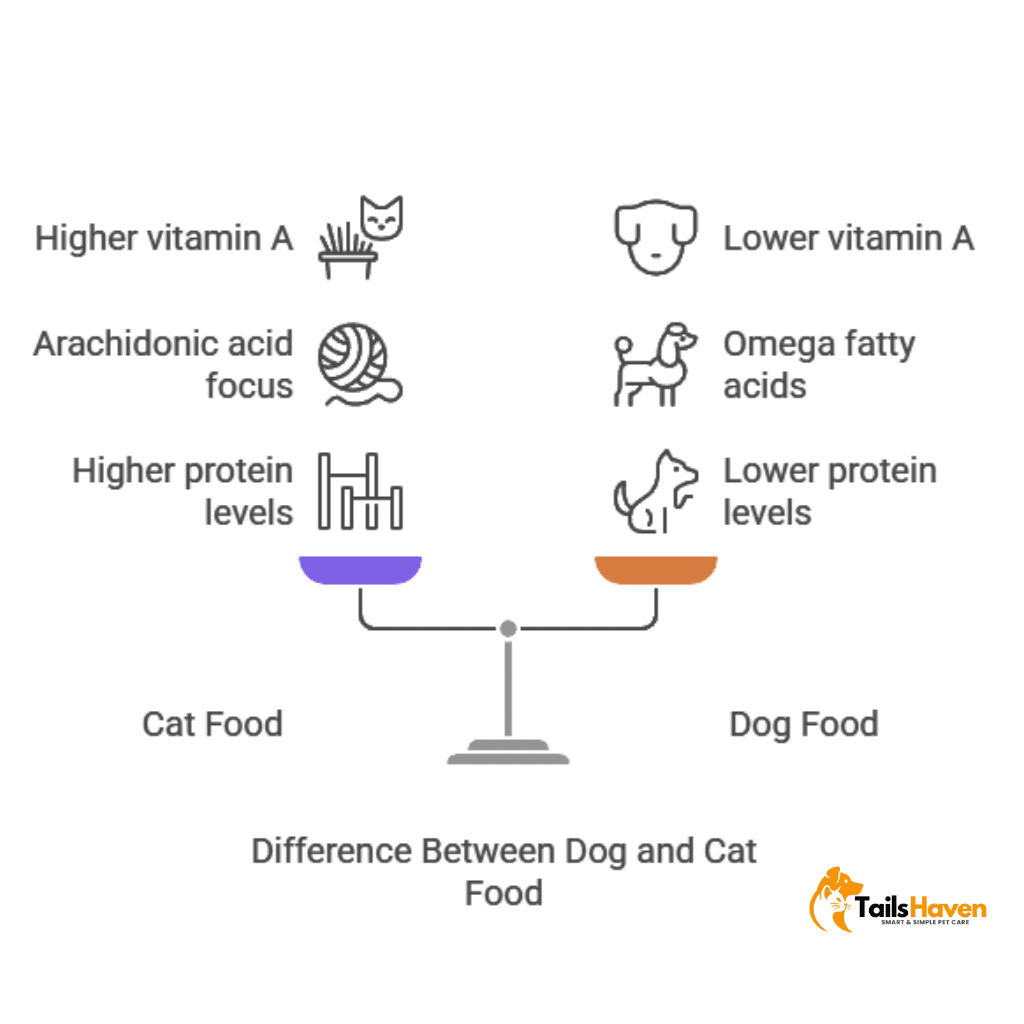
Vitamin A
- Cats require pre-formed vitamin A from animal sources
- Dogs can convert plant-based beta-carotene into vitamin A
This is why cat food includes direct vitamin A supplementation.
Niacin and B Vitamins
Cats require higher levels of certain B vitamins that dogs do not.
Calcium and Phosphorus Balance
Both pets need calcium and phosphorus, but in different ratios. Improper balance can affect:
- Bone development
- Kidney health
Can Dogs Eat Cat Food Occasionally?
A small accidental bite is usually not dangerous. However, regular feeding is unsafe.
Short-term effects may include:
- Upset stomach
- Diarrhea
Long-term feeding can cause:
- Obesity
- Nutrient imbalance
- Liver and kidney strain
Can Cats Eat Dog Food? (More Dangerous)
This is significantly more dangerous than dogs eating cat food.
Dog food lacks:
- Taurine
- Adequate animal protein
- Certain essential vitamins
Long-term feeding of dog food to cats can lead to:
- Heart disease
- Vision problems
- Weak immune system
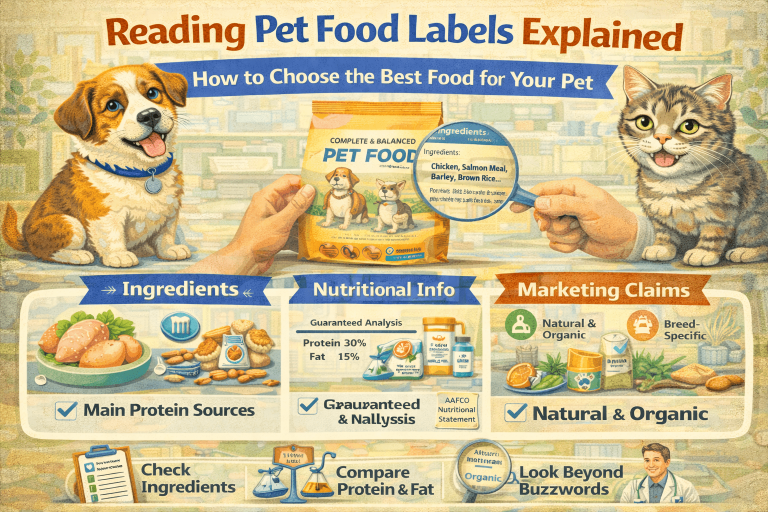
Reading Pet Food Labels Correctly
Look for:
- Species-specific labeling
- Named animal proteins as first ingredients
- AAFCO nutritional adequacy statement
Avoid foods that do not clearly state whether they are formulated for dogs or cats.
Special Diets and Exceptions
Some pets require prescription diets due to:
- Kidney disease
- Allergies
- Weight management
Never substitute dog and cat food without veterinary guidance in these cases.
Feeding Multiple Pets Safely
If you own both dogs and cats:
- Feed them separately
- Remove uneaten food promptly
- Use elevated feeding stations for cats
This prevents accidental food swapping.
🎥 YouTube Video Suggestion:
Conclusion
Dog food and cat food are not interchangeable. Each is carefully formulated for species-specific needs. Feeding the correct food is one of the most important responsibilities of pet ownership and directly impacts lifespan and quality of life.