Why Pets Chew Everything and How to Stop It the Right Way
Introduction
Chewing is one of the most common—and frustrating—pet behaviors. Shoes, furniture, cables, and household items often fall victim to pets that chew excessively. While many owners see chewing as bad behavior, it is actually a natural form of communication and stress relief.
Understanding why pets chew is the first step toward stopping destructive habits without harming your bond.
Why Chewing Is a Natural Behavior
Chewing serves different purposes depending on age, species, and emotional state.
For dogs:
- Exploration
- Stress relief
- Teething
- Boredom
For cats:
- Curiosity
- Dental stimulation
- Anxiety relief
Punishing chewing does not address the underlying cause.
Common Reasons Pets Chew Excessively
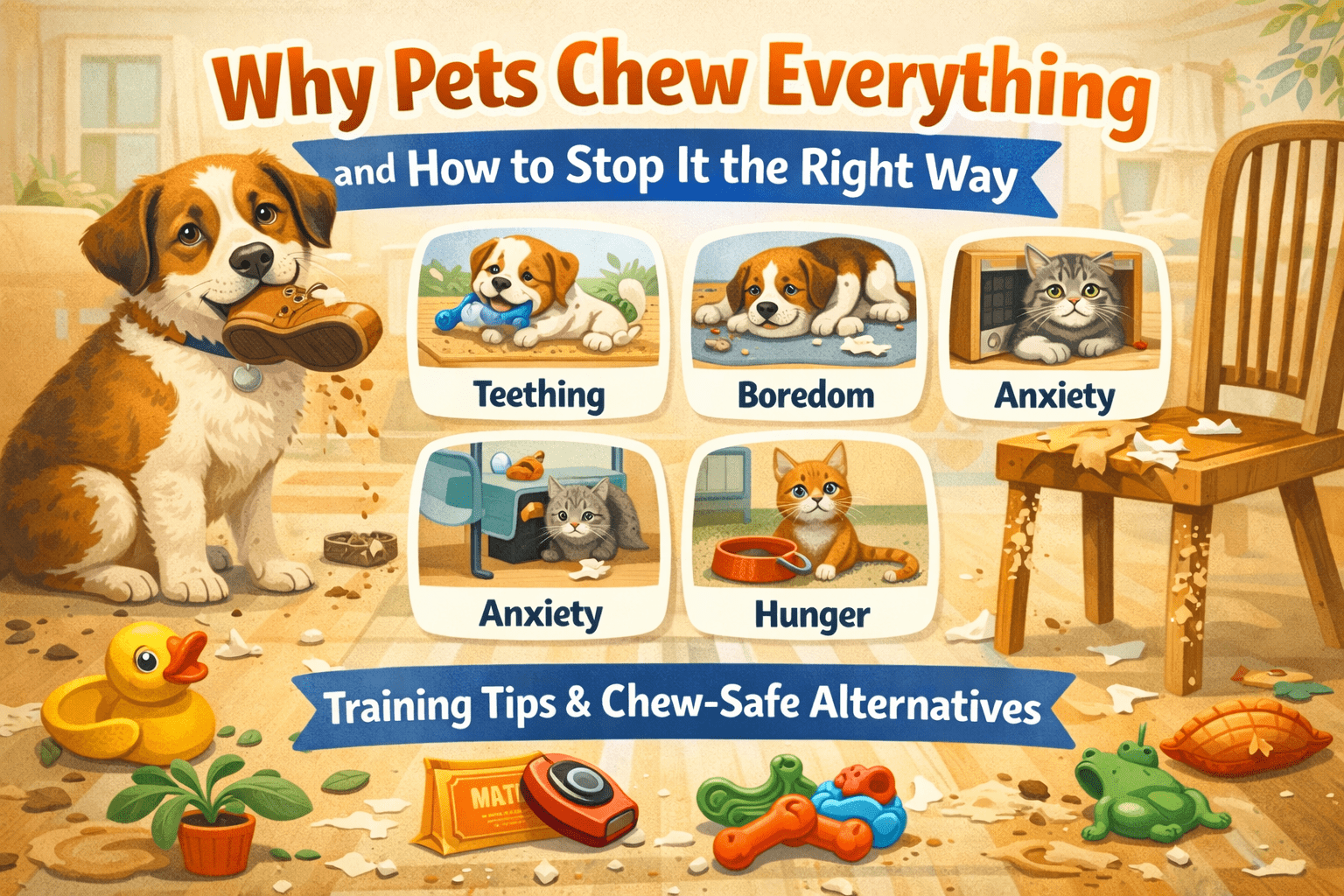
1. Teething (Especially in Puppies)
Young dogs chew to relieve gum pain as new teeth emerge. This phase usually peaks between 3–6 months of age.
2. Boredom and Lack of Stimulation
Pets left alone without mental or physical stimulation often chew to release pent-up energy.
3. Anxiety and Stress
Separation anxiety is a major cause of destructive chewing. Pets chew to self-soothe.
4. Hunger or Dietary Imbalance
Nutritional deficiencies can trigger abnormal chewing behavior.
Why Punishment Makes Chewing Worse
Yelling or physical punishment:
- Increases anxiety
- Breaks trust
- Does not teach alternatives
Pets may chew in secret instead, worsening the problem.
How to Stop Destructive Chewing Safely

1. Provide Appropriate Chew Toys
Choose:
- Durable chew toys
- Age-appropriate textures
- Non-toxic materials
Rotate toys weekly to keep them interesting.
2. Increase Physical Exercise
A tired pet is less likely to chew destructively.
- Daily walks
- Play sessions
- Training exercises
Exercise addresses the root cause.
3. Mental Stimulation Is Essential
Puzzle toys, scent games, and training sessions keep pets mentally engaged and reduce boredom-related chewing.
4. Create a Calm Environment
Reduce stress triggers such as:
- Loud noises
- Long periods of isolation
- Inconsistent routines
Predictability reduces anxiety.
5. Redirect, Don’t React
If you catch your pet chewing:
- Calmly remove the object
- Offer an appropriate chew toy
- Praise when they use it
Positive reinforcement builds good habits.
When Chewing Signals a Bigger Problem
Consult a veterinarian or behaviorist if chewing is:
- Sudden and intense
- Accompanied by aggression
- Causing self-injury
Medical issues such as dental pain or anxiety disorders may be involved.
Chewing in Cats: Special Considerations
Cats may chew:
- Plastic
- Plants
- Electrical cords
Ensure:
- Toxic plants are removed
- Cords are covered
- Safe chew alternatives are available
🎥 YouTube Video Suggestion:
Conclusion
Chewing is not bad behavior—it is unmet needs expressing themselves. When owners focus on understanding rather than punishment, chewing problems can be resolved effectively and humanely.