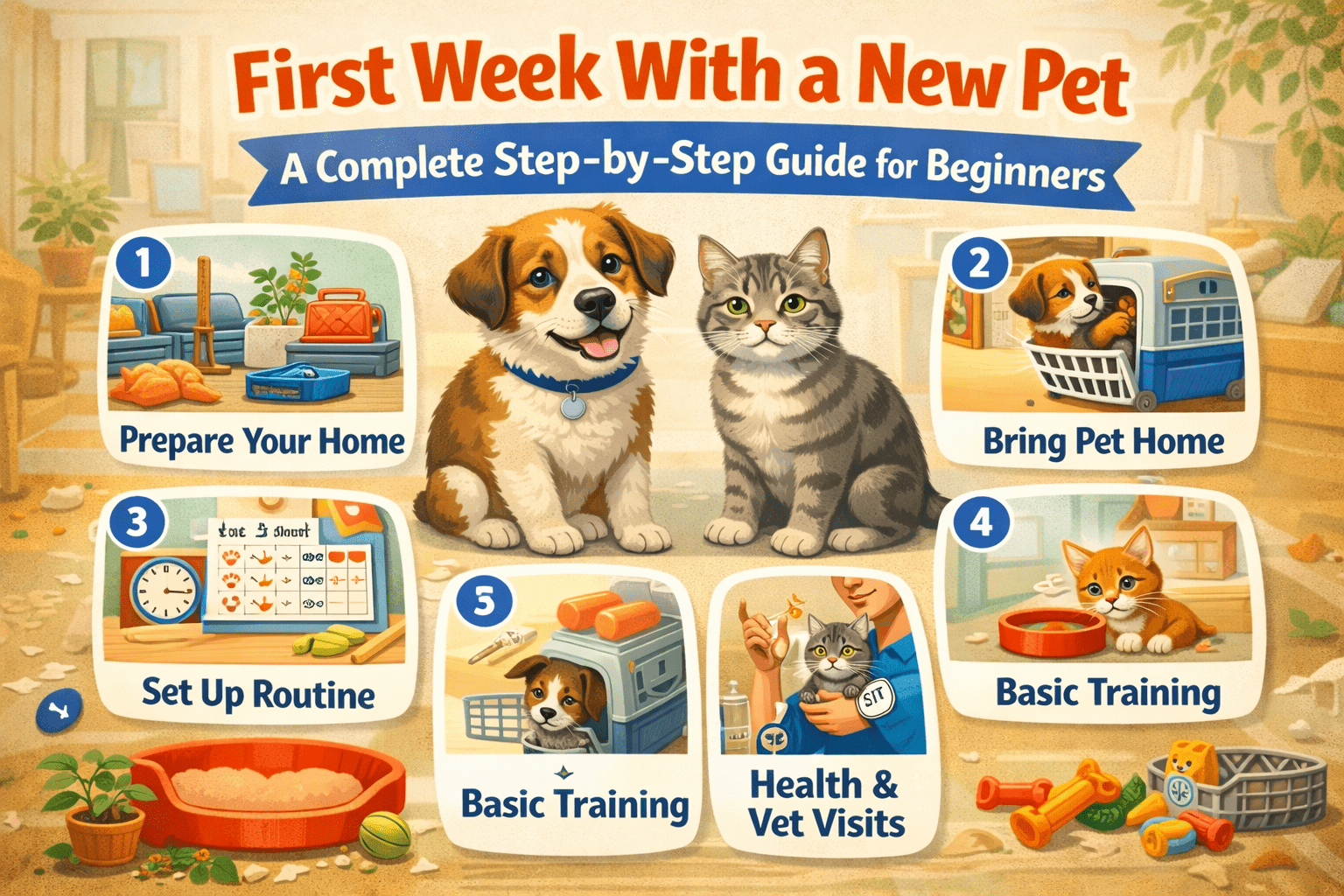
First Week With a New Pet: A Complete Step-by-Step Guide for Beginners
Introduction
Bringing a new pet home is exciting, emotional, and sometimes overwhelming. The first week is one of the most important periods in your pet’s life because it sets the foundation for behavior, trust, and long-term health. Many problems that appear later—such as anxiety, aggression, or house-training issues—often begin with mistakes made during the first few days.
This guide walks you through exactly what to do during the first week with a new pet, whether it’s a puppy, kitten, or adult rescue.
Understanding Your Pet’s Emotional State
A new home means:
- New smells
- New sounds
- New people
- New rules
Even confident pets feel uncertain at first. Some may hide, others may cling, and some may appear overly energetic. All of these reactions are normal.
Your goal during the first week is security, not perfection.
Day 1: Bringing Your Pet Home
Keep the Arrival Calm
Avoid loud welcomes, crowds, or too much handling. Let your pet explore slowly.
Provide:
- A quiet room
- Food and water
- A comfortable bed
- A litter box or potty area
Do not force interaction. Let your pet approach you.
Introduce the Safe Space
Every pet needs a “safe zone” where they can retreat without disturbance. This space should remain consistent throughout the first week.
Benefits of a safe space:
- Reduces stress
- Prevents overstimulation
- Encourages confidence
Days 2–3: Establishing Basic Routines

Feeding Schedule
Feed at the same times every day. Routine builds trust and prevents digestive issues.
Avoid:
- Sudden food changes
- Overfeeding treats
If you must change food, do it gradually.
Bathroom Training
For dogs:
- Take them out after meals, naps, and play
- Praise immediately after success
For cats:
- Keep the litter box clean
- Place it in a quiet, accessible location
Never punish accidents—they are part of learning.
Days 4–5: Gentle Bonding and Observation
Building Trust
Bonding does not happen through constant touching—it happens through respect.
Healthy bonding activities:
- Sitting calmly near your pet
- Gentle play
- Soft talking
- Short training sessions
Watch how your pet responds and adjust accordingly.
Health Observation
This is the time to observe:
- Appetite
- Energy level
- Stool consistency
- Breathing
Mild stress symptoms are normal, but severe or persistent signs require veterinary advice.
Days 6–7: Introducing Structure

Simple Training
Start with:
- Name recognition
- Sit (for dogs)
- Gentle handling exercises
Keep sessions short and positive.
Social Exposure (Slowly)
Avoid overwhelming introductions. Gradual exposure to:
- New people
- Household sounds
- Other pets
Builds confidence without fear.
Common First-Week Mistakes to Avoid
- Too many visitors
- Inconsistent feeding times
- Ignoring rest time
- Punishing fear-based behavior
- Expecting instant obedience
Patience is essential.
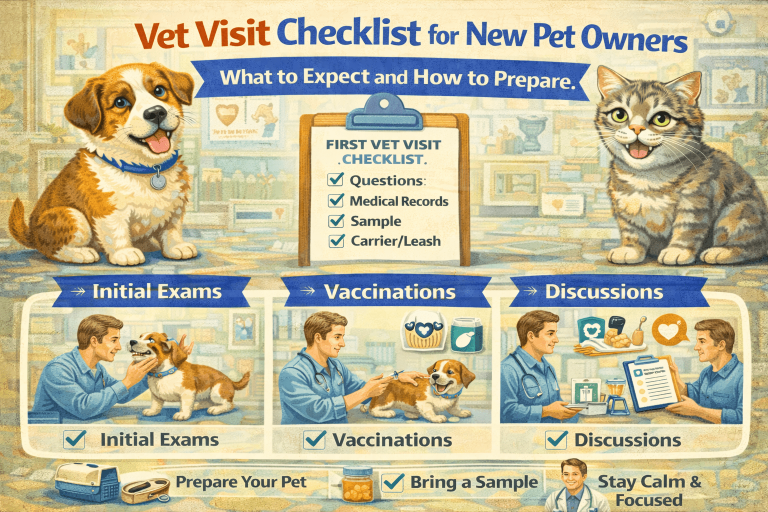
When to Schedule a Vet Visit
A veterinary check within the first week ensures:
- Vaccination review
- Parasite control
- Health baseline
Early vet visits prevent future complications.
🎥 YouTube Video Suggestion:
Conclusion
The first week with a new pet is about safety, patience, and consistency. When owners focus on trust rather than control, pets adjust faster and form deeper bonds that last a lifetime.