How Much Should You Feed Your Pet? A Complete Portion & Nutrition Guide
Introduction
One of the most common questions pet owners ask is: “How much should I feed my pet?”
Overfeeding and underfeeding are both serious problems. Feeding the wrong amount—even with high-quality food—can lead to obesity, malnutrition, digestive disorders, and long-term health complications.
This guide explains exactly how to determine the right portion size for your pet, based on species, age, size, activity level, and lifestyle.
Why Proper Portion Control Matters
Food is fuel. Too much or too little fuel disrupts your pet’s entire system.
Improper feeding can cause:
- Obesity or unhealthy weight loss
- Joint and mobility problems
- Diabetes and heart disease
- Digestive issues
- Reduced lifespan
Correct portions support energy, immunity, and overall well-being.
Factors That Determine How Much to Feed
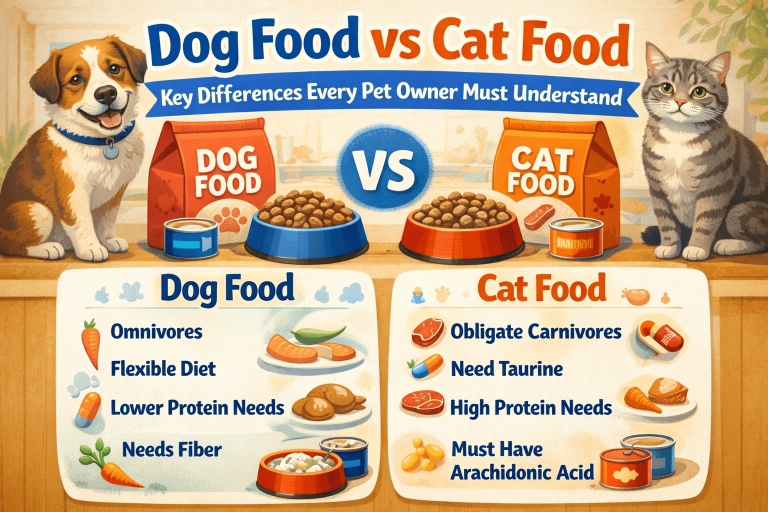
1. Species (Dog vs Cat)
Dogs and cats have very different metabolisms.
- Dogs can regulate hunger better and adapt to varied diets
- Cats require more frequent, protein-dense meals
This means portion sizes and feeding frequency differ significantly.
2. Age of Your Pet
- Puppies & kittens need more calories for growth
- Adult pets require maintenance portions
- Senior pets often need fewer calories but higher-quality nutrients
Feeding adult portions to young pets—or vice versa—creates imbalance.
3. Weight and Body Condition
Do not rely only on your pet’s current weight. Assess body condition:
- Ribs should be felt but not seen
- Waist should be visible from above
- No excessive fat around belly
If unsure, a veterinarian can assess body condition accurately.
4. Activity Level
Highly active pets burn more calories than sedentary ones.
Examples:
- Working dogs
- Outdoor cats
- Pets with daily exercise routines
Inactive pets need smaller portions to avoid weight gain.
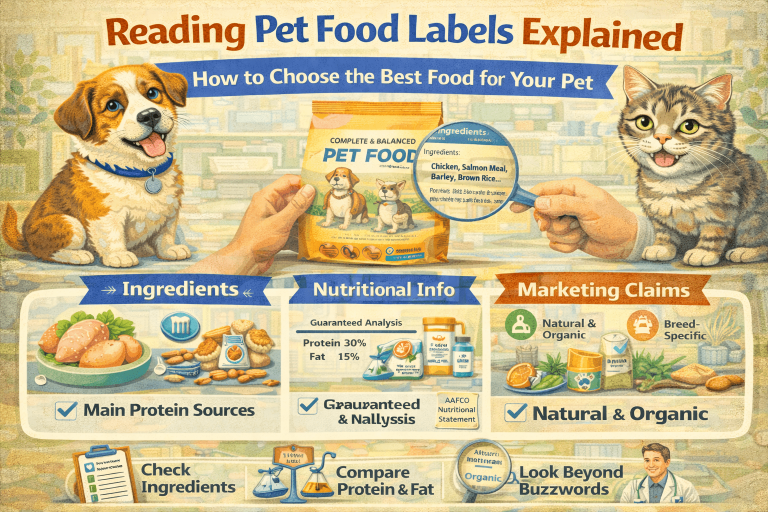
Understanding Pet Food Labels
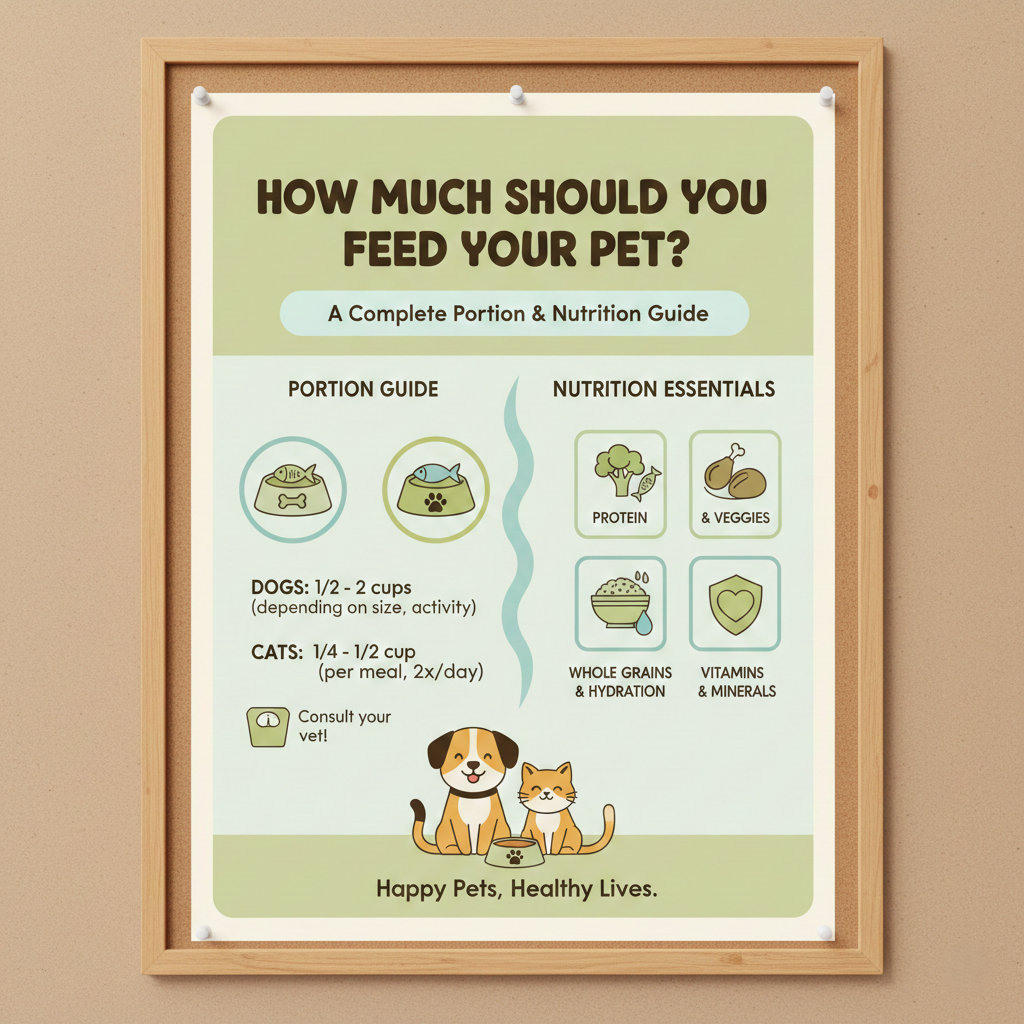
Pet food labels include feeding guidelines, but these are starting points, not exact rules.
Key things to check:
- Calorie content per cup or can
- Feeding recommendations by weight
- Life-stage suitability
Always adjust based on your pet’s response.
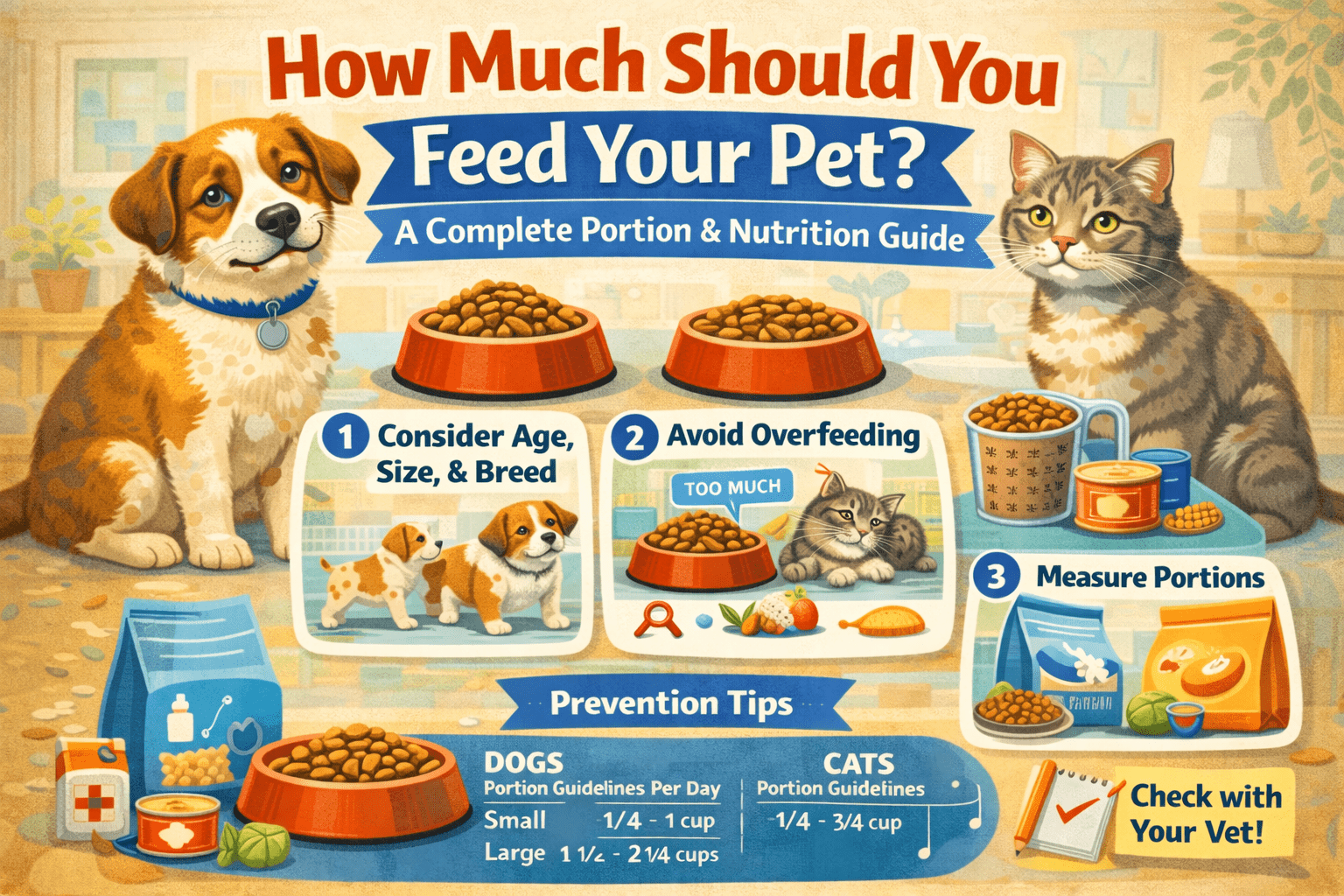
How Much Should Dogs Eat?
General Dog Feeding Guidelines
Most adult dogs eat:
- 1–2 meals per day
Puppies may need:
- 3–4 meals per day
Portion size depends on:
- Weight
- Breed
- Energy level
Avoid free-feeding—it often leads to overeating.
How Much Should Cats Eat?
Cats naturally eat small, frequent meals.
Options:
- Measured meals 2–3 times daily
- Controlled free-feeding (vet-approved)
Cats require higher protein and calorie density than dogs.
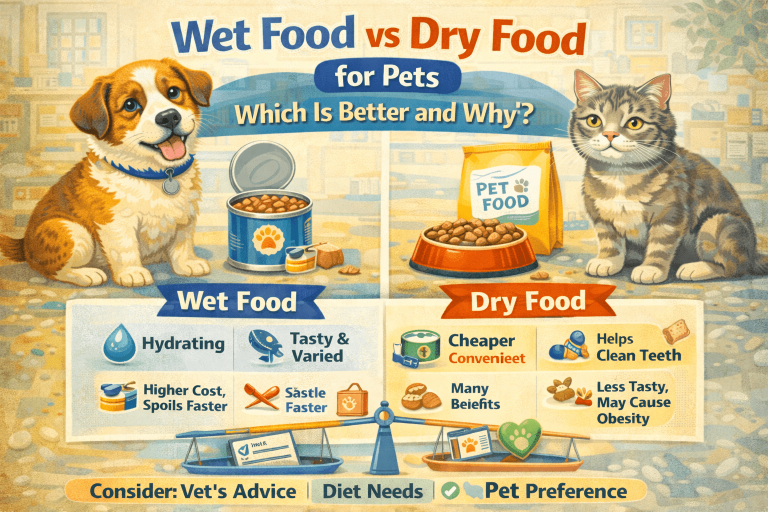
Wet Food vs Dry Food Portions
Wet food contains more moisture and fewer calories per gram.
Important differences:
- Dry food: calorie-dense, easy to overfeed
- Wet food: better hydration, controlled calories
Mixing both can work well when portions are measured correctly.
Treats: The Hidden Calorie Trap
Treats should never exceed 10% of daily calories.
Common mistakes:
- Giving table scraps
- Using treats as affection
- Forgetting to count treat calories
Use small, low-calorie treats for training.
Signs You Are Feeding the Wrong Amount
Watch for:
- Weight gain or loss
- Low energy
- Excessive hunger
- Digestive upset
Adjust portions gradually, not suddenly.
Special Diet Considerations
Pets with:
- Diabetes
- Kidney disease
- Allergies
Require veterinary-guided feeding plans.
Never guess with medical diets.
🎥 YouTube Video Suggestion:
Conclusion
Feeding the right amount is just as important as feeding the right food. Portion control supports longevity, comfort, and quality of life for your pet.