How to Socialize Your Pet Safely: A Step-by-Step Behavior Guide
Introduction
Proper socialization shapes how pets interact with people, animals, and environments throughout their lives. Poor socialization often leads to fear, aggression, anxiety, and stress-based behaviors.
This guide explains how to socialize your pet safely and effectively, whether you have a puppy, kitten, or adult pet.
What Socialization Really Means
Socialization is not forcing interaction. It is gradual, positive exposure to new experiences.
Goals:
- Confidence
- Emotional stability
- Reduced fear
Best Time to Socialize
Puppies and Kittens
The critical socialization window is:
- Puppies: 3–14 weeks
- Kittens: 2–9 weeks
However, adult pets can still be socialized with patience.
Safe Socialization Steps
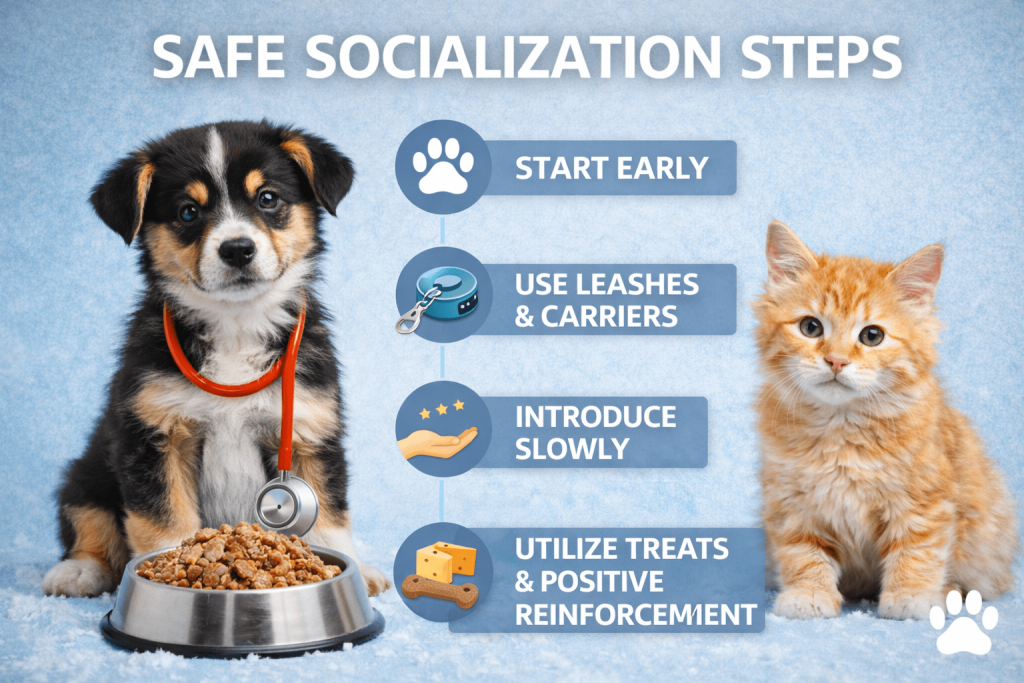
Step 1: Start Slow
Begin with calm environments and limit exposure time.
Step 2: Use Positive Reinforcement
Reward calm behavior with treats, praise, or play.
Step 3: Control the Environment
Avoid crowded or overwhelming situations early on.
Step 4: Observe Body Language
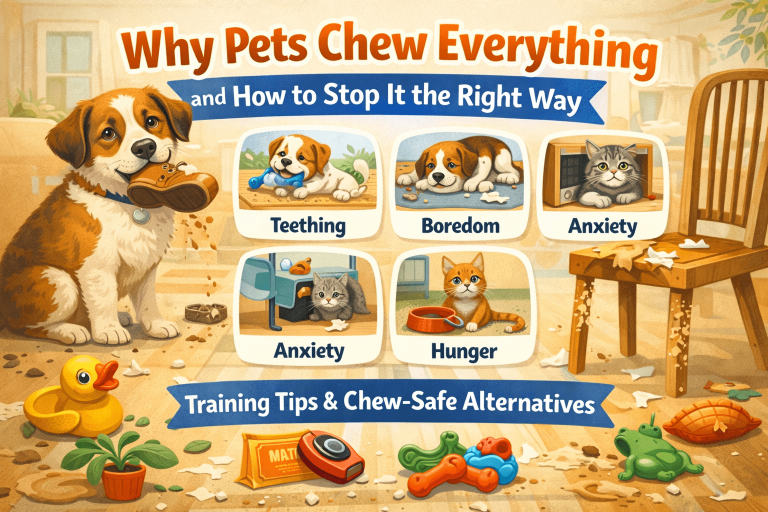
Signs of stress include:
- Freezing
- Tail tucked
- Growling
- Hiding
Stop if stress appears.
Socializing Dogs vs Cats
Dogs
Dogs benefit from:
- Structured walks
- Puppy classes
- Controlled playdates
Cats
Cats require:
- Slower pacing
- Safe escape spaces
- Short interaction sessions
Never force contact.
Common Socialization Mistakes
- Forcing interaction
- Skipping early exposure
- Punishing fear responses
- Moving too fast
Mistakes can cause long-term anxiety.
Socialization and Adult Rescue Pets
Adult pets may need:
- Professional guidance
- Extra time
- Trauma-aware approaches
Progress may be slower—but it’s possible.
When to Seek Professional Help
If your pet shows:
- Aggression
- Extreme fear
- Panic responses
Consult a certified trainer or behaviorist.
🎥 YouTube Video Suggestion:
Socialization is an ongoing process, not a one-time event. With patience, structure, and empathy, pets learn to navigate the world calmly and confidently.