Nail Trimming for Pets: A Stress-Free Beginner’s Guide
Introduction
Nail trimming is one of the most intimidating grooming tasks for pet owners. Many avoid it due to fear of hurting their pet or causing stress. However, neglected nails can cause pain, posture problems, joint strain, and even injury.
This guide explains how to trim your pet’s nails safely, calmly, and confidently, even if you’re a complete beginner.
Why Nail Trimming Is Important
Overgrown nails can:
- Cause pain while walking
- Alter posture and joint alignment
- Break or split painfully
- Get caught on carpets or furniture
Regular trimming is a form of preventive healthcare.
How Often Should You Trim Your Pet’s Nails?
General guidelines:
- Dogs: every 3–4 weeks
- Cats: every 2–4 weeks
If you hear nails clicking on the floor, they are too long.
Understanding Nail Anatomy
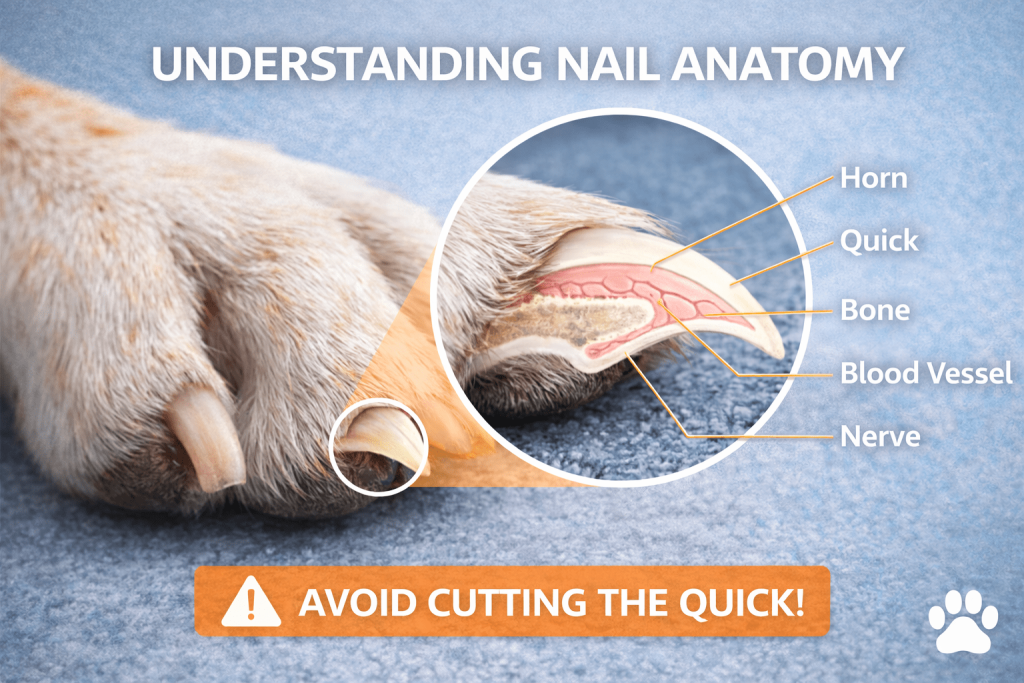
The Quick
Inside each nail is a sensitive area called the quick, which contains nerves and blood vessels.
- Cutting the quick causes pain and bleeding
- Light-colored nails make the quick easier to see
- Dark nails require extra caution
Choosing the Right Nail Trimming Tools
Nail Clippers
Options include:
- Scissor-style clippers
- Guillotine clippers
Choose based on pet size and comfort.
Nail Grinders
Grinders:
- Reduce risk of cutting the quick
- Smooth rough edges
They are excellent for nervous pets.
Preparing Your Pet for Nail Trimming
Preparation reduces stress.
Steps:
- Trim nails after exercise
- Choose a calm environment
- Handle paws regularly before trimming
- Keep treats ready
Never rush the process.
Step-by-Step Nail Trimming Guide
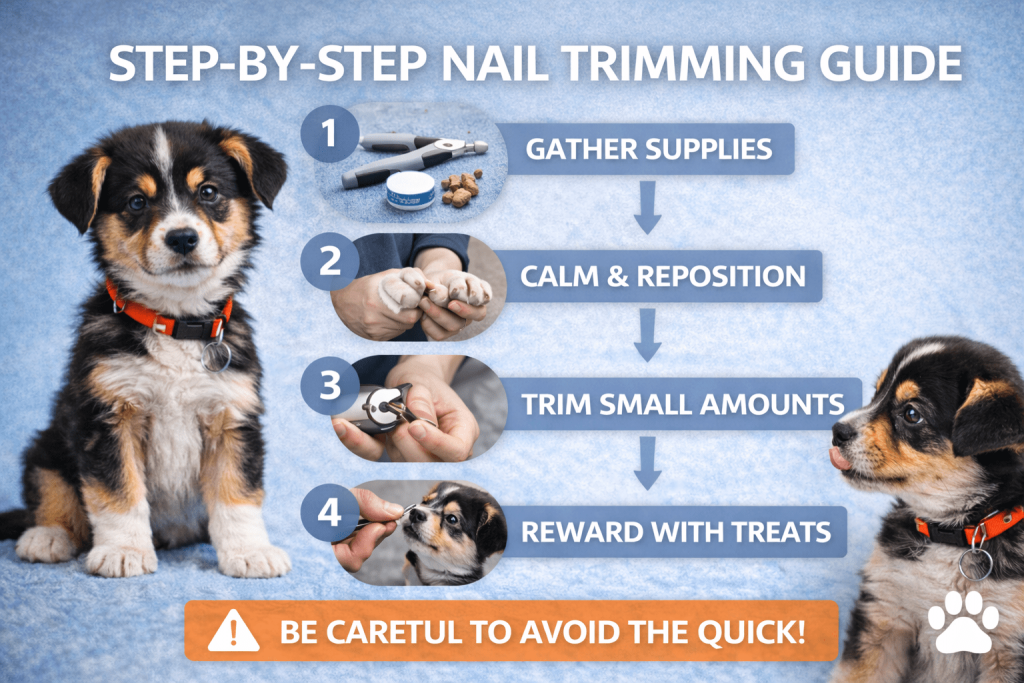
Step 1: Position Your Pet Comfortably
Ensure your pet feels secure. Some prefer sitting, others lying down.
Step 2: Identify the Cutting Area
Trim only the sharp tip of the nail. When in doubt, trim less.
Step 3: Trim Gradually
Small cuts reduce risk. Pause between nails if needed.
Step 4: Reward Immediately
Praise and treats reinforce calm behavior.
What If You Accidentally Cut the Quick?
Stay calm.
- Apply styptic powder or cornstarch
- Apply gentle pressure
- Speak calmly to your pet
Accidents happen—even to professionals.
Nail Trimming for Cats: Special Tips
- Trim only the sharp tip
- Avoid cutting too close
- Wrap your cat gently if needed
Cats often tolerate short sessions better.
When to Choose Professional Grooming
Professional help is best for:
- Extremely anxious pets
- Very thick nails
- Owners lacking confidence
Home care + professional support is ideal.
Common Nail Trimming Mistakes
- Cutting too much at once
- Trimming when pet is anxious
- Skipping rewards
- Waiting too long between trims
Consistency makes trimming easier over time.
🎥 YouTube Video Suggestion:
Conclusion
Nail trimming does not have to be stressful. With the right tools, preparation, and patience, it becomes a simple part of your pet’s grooming routine—protecting comfort, mobility, and overall health.