Pet Proofing Your House: A Complete Safety Checklist for New Owners
Introduction
Bringing a pet into your home is similar to welcoming a curious toddler. Pets explore the world with their mouths, paws, and noses, which means everyday household items can quickly become dangerous. Many accidents happen not because owners are careless, but because they are unaware of hidden risks.
Pet proofing your home is one of the most important responsibilities of a new pet owner. This guide provides a complete, room-by-room safety checklist to help you create a secure environment where your pet can explore without danger.
Why Pet Proofing Is Essential
Pets do not understand what is dangerous and what is safe. Electrical cords, cleaning chemicals, small objects, and even furniture can pose serious risks.
Pet proofing helps:
- Prevent injuries and poisoning
- Reduce emergency vet visits
- Lower stress for owners
- Create confidence and freedom for pets
A safe home allows your pet to relax and learn appropriate behavior.
General Pet Proofing Rules for Every Home
Secure Small Objects
Pets may swallow:
- Coins
- Rubber bands
- Buttons
- Children’s toys
Keep small objects off floors and low surfaces.
Hide Electrical Cords
Chewing cords can cause burns or electrocution.
Use:
- Cord protectors
- Cable organizers
- Furniture to block access
This is especially important for puppies and kittens.
Remove Toxic Substances
Store securely:
- Cleaning products
- Medications
- Insecticides
- Paints and chemicals
Even small amounts can be fatal if ingested.
Living Room Safety
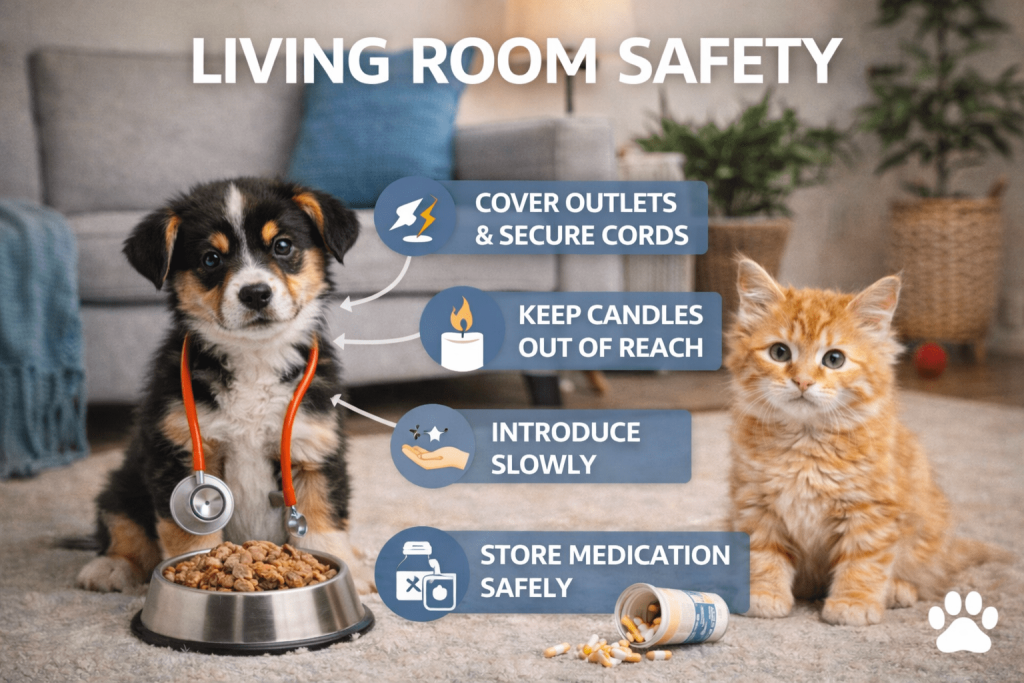
Furniture and Decorations
- Secure heavy furniture
- Avoid glass decorations at floor level
- Anchor shelves and TVs
Pets can knock items over during play.
Plants
Many common houseplants are toxic to pets.
Keep plants:
- Out of reach
- Or replaced with pet-safe alternatives
Always research plant safety before bringing them home.
Kitchen Pet Proofing
Food Hazards
Keep harmful foods locked away, including:
- Chocolate
- Onions and garlic
- Grapes and raisins
- Cooked bones
Trash cans should have secure lids.
Appliances
Pets may climb into:
- Dishwashers
- Ovens
- Washing machines
Always check before closing doors.
Bathroom Safety
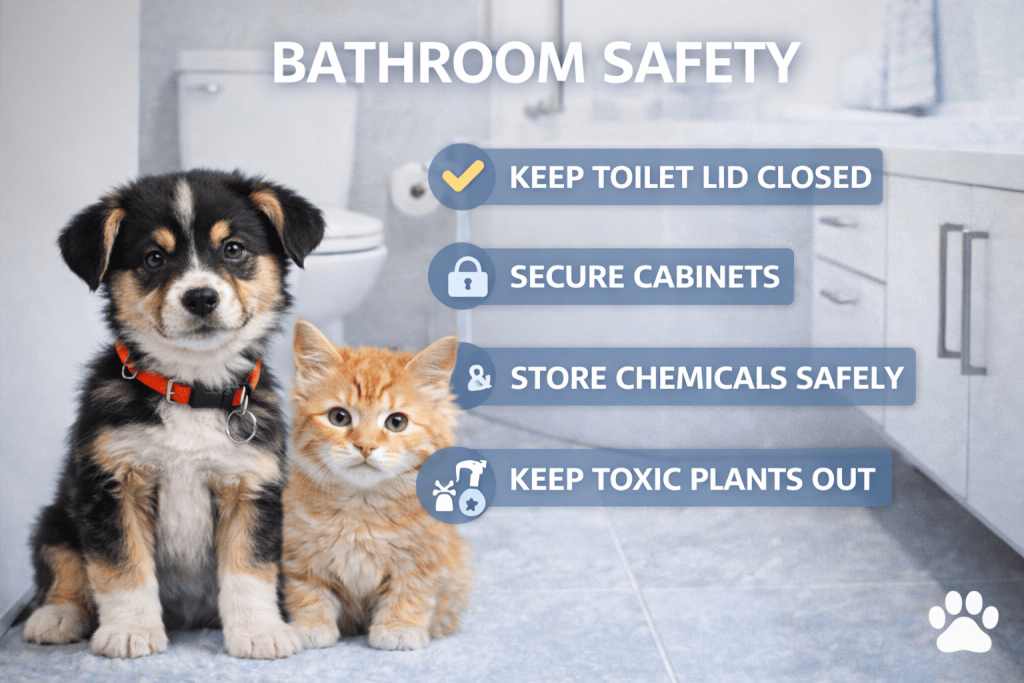
Toilets and Water Risks
Keep toilet lids closed to prevent:
- Drowning risk
- Drinking contaminated water
Personal Care Products
Store away:
- Shampoo
- Razors
- Medications
- Cosmetics
Pets may chew packaging or ingest residue.
Bedroom Safety
- Keep jewelry stored
- Avoid dangling cords or blind strings
- Secure nightstand items
Cats, especially, are attracted to dangling objects.
Outdoor and Balcony Safety
Fencing and Barriers
- Check for gaps in fences
- Secure balconies with pet-safe netting
Falls are a serious risk for cats and small dogs.
Garden Hazards
Avoid:
- Toxic plants
- Pesticides
- Sharp tools left unattended
Supervise outdoor time whenever possible.
Creating a Safe Zone for Your Pet
Every pet needs a space where they feel secure.
Include:
- Comfortable bed
- Food and water
- Toys
- Quiet environment
Safe zones reduce anxiety and overstimulation.
Pet Proofing by Age
Puppies and Kittens
- Extra supervision
- Fewer accessible rooms
- Strong chew-proofing
Adult Pets
- Focus on routine hazards
- Adjust for behavioral tendencies
Senior Pets
- Non-slip flooring
- Easy access to food and water
- Reduced climbing hazards
Common Pet Proofing Mistakes
- Assuming pets “know better”
- Forgetting vertical spaces (cats)
- Leaving hazards temporarily accessible
- Skipping supervision during early weeks
🎥 YouTube Video Suggestion:
Conclusion
Pet proofing is not about restriction—it’s about protection. A safe home allows pets to explore, learn, and relax without constant risk, giving owners peace of mind and pets the freedom they need.