Reading Pet Food Labels Explained: How to Choose the Best Food for Your Pet
Introduction
Walking down the pet food aisle can feel overwhelming. Bright packaging, bold claims, and long ingredient lists make it difficult to know which food is truly healthy for your pet. Many owners rely on marketing phrases like “premium,” “natural,” or “grain-free,” without understanding what these terms actually mean.
Learning how to read pet food labels empowers you to choose food based on nutrition and quality, not advertising. This guide breaks down pet food labels in a clear, practical way so you can confidently select the best option for your dog or cat.
Why Understanding Pet Food Labels Matters
Your pet eats the same food every day. Small nutritional imbalances, when repeated over months or years, can lead to:
- Obesity or malnutrition
- Digestive issues
- Skin and coat problems
- Chronic disease
Labels reveal what your pet is truly consuming.
The Ingredient List: What Comes First Matters
Ingredients are listed by weight before cooking.
High-Quality Ingredients
Look for:
- Named animal proteins (e.g., chicken, turkey, salmon)
- Whole-food ingredients
- Clearly identified fats
Avoid vague terms like “meat by-products” without clarification.
Understanding By-Products
By-products are not automatically bad. Some provide essential nutrients. The key is quality and transparency.
Guaranteed Analysis Explained
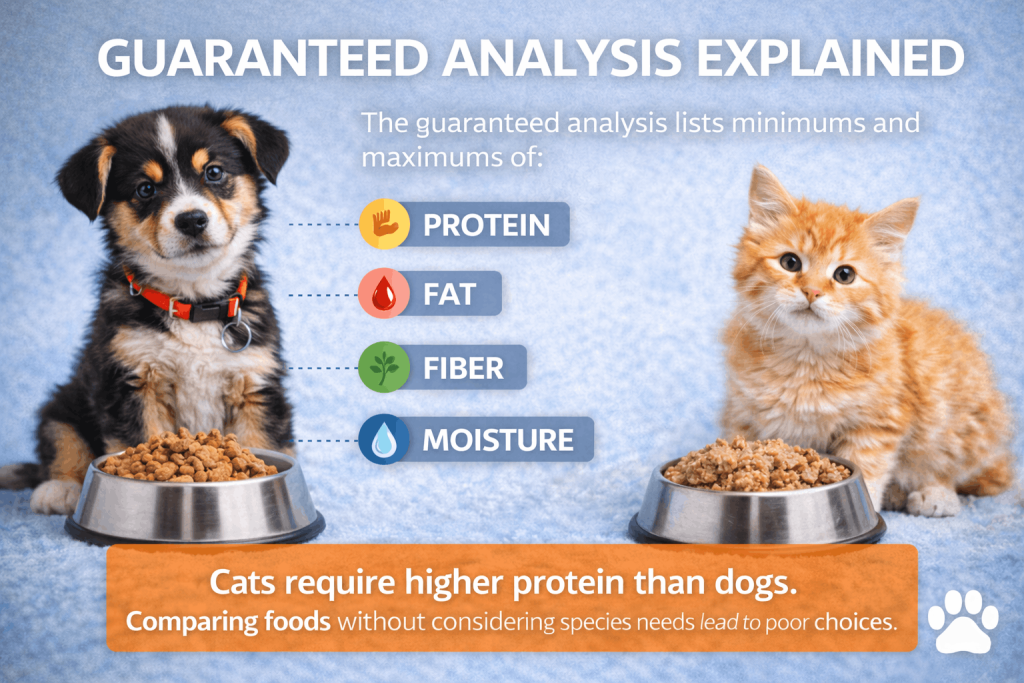
The guaranteed analysis lists minimums and maximums of:
- Protein
- Fat
- Fiber
- Moisture
Cats require higher protein than dogs. Comparing foods without considering species needs leads to poor choices.
AAFCO Statement: The Most Important Line
The AAFCO nutritional adequacy statement confirms whether the food meets established standards.
Look for:
- “Complete and balanced”
- Life stage suitability (growth, adult, all life stages)
Foods without this statement may be nutritionally incomplete.
Decoding Marketing Terms
“Natural”
Means no artificial colors or flavors—but does not guarantee quality.
“Grain-Free”
Not necessary for most pets unless medically advised.
“Premium” or “Holistic”
Marketing terms with no legal definition.
Always prioritize ingredients and nutritional adequacy over labels.
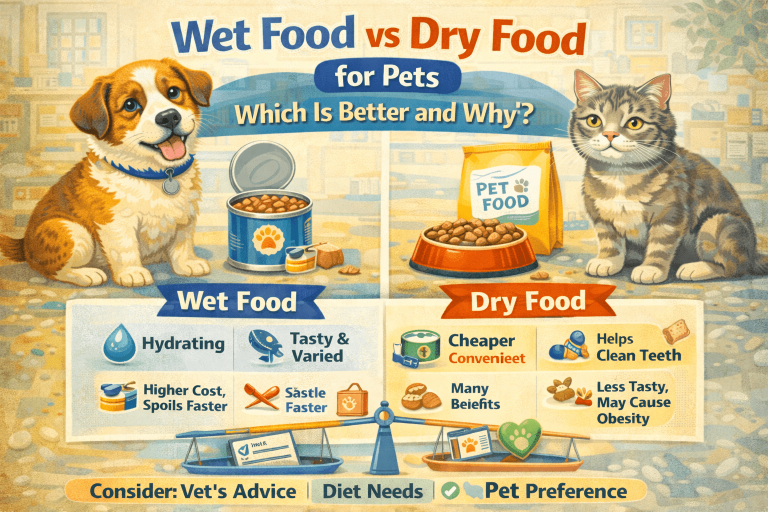
Dry vs Wet Labels
Wet food labels show higher moisture content, which affects protein percentages.
Always compare foods on a dry matter basis when evaluating nutrition.
Common Label Red Flags
- Artificial colors
- Excessive fillers
- Unspecified animal sources
- No AAFCO statement
These signs suggest lower-quality formulations.
Choosing Food for Special Needs
Pets with:
- Allergies
- Weight issues
- Medical conditions
Require vet-guided food selection. Labels alone are not enough.
🎥 YouTube Video Suggestion:
Conclusion
Understanding pet food labels protects your pet’s health and your wallet. Knowledge allows you to choose food based on nutrition, not marketing.