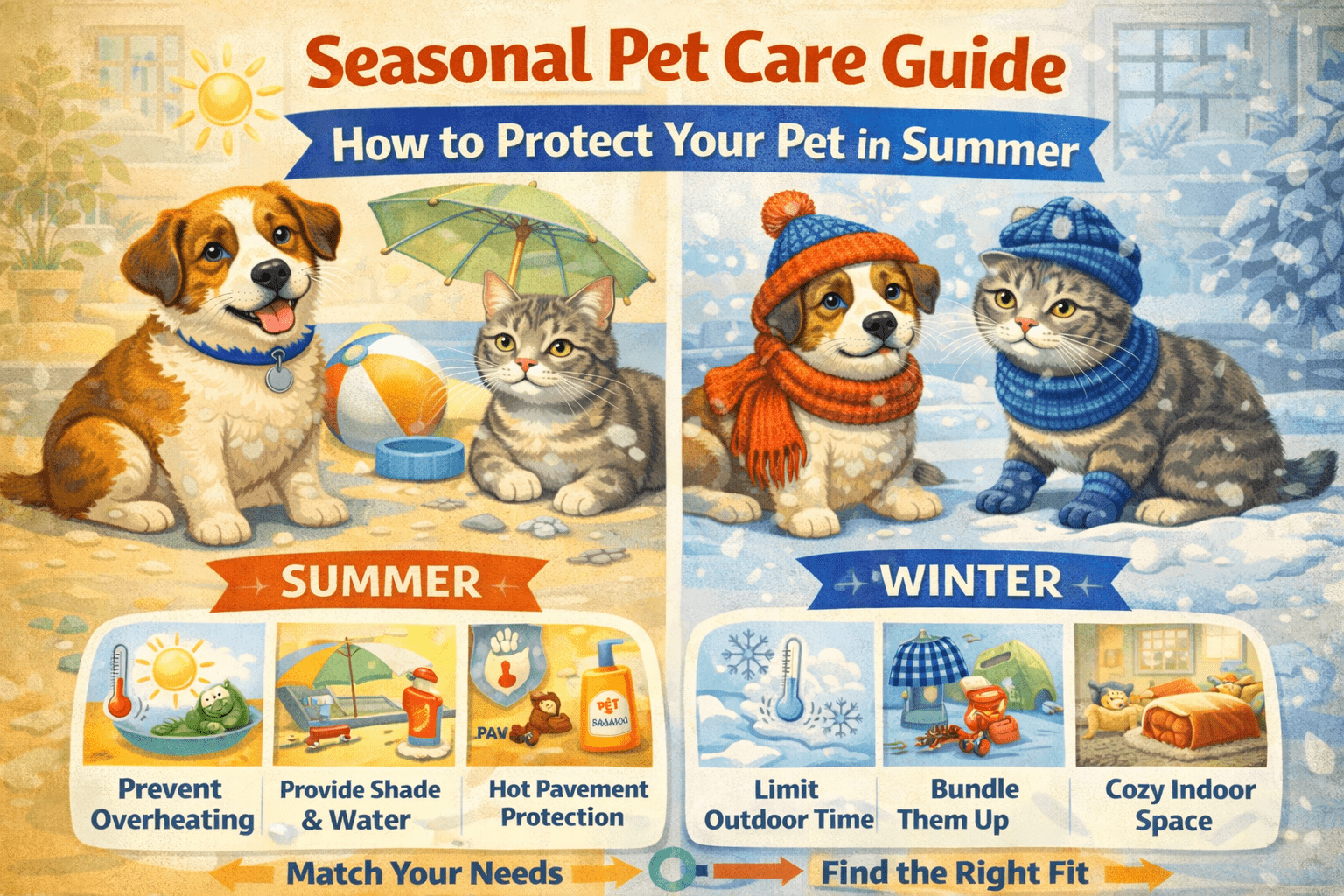
Seasonal Pet Care Guide: How to Protect Your Pet in Summer and Winter
Introduction
Just like humans, pets are affected by seasonal changes. Temperature shifts, humidity, allergens, and daylight changes can significantly impact your pet’s health, comfort, and behavior. Many preventable illnesses occur simply because owners follow the same care routine year-round.
This guide explains how to adjust your pet care routine for summer and winter, helping you keep your dog or cat safe, comfortable, and healthy throughout the year.
Why Seasonal Pet Care Is Important
Pets regulate body temperature differently than humans. They cannot sweat efficiently and rely on panting, hydration, and environmental conditions to stay comfortable.
Ignoring seasonal needs can lead to:
- Heatstroke
- Hypothermia
- Dehydration
- Skin problems
- Weakened immunity
Season-appropriate care prevents emergencies and improves quality of life.
SUMMER PET CARE GUIDE
1. Heat Safety and Temperature Control
Hot weather is dangerous for pets, especially dogs with thick coats or short noses.
Signs of overheating:
- Excessive panting
- Drooling
- Lethargy
- Vomiting
- Collapse
Never leave pets in parked cars—even for a few minutes.
Prevention tips:
- Walk pets early morning or evening
- Provide shaded resting areas
- Keep indoor environments well-ventilated
2. Hydration Is Critical
Pets lose fluids faster in summer.
Ensure:
- Fresh water available at all times
- Multiple water bowls indoors and outdoors
- Hydration during walks and travel
Wet food can help increase moisture intake for cats.
3. Summer Exercise Adjustments
Hot pavement can burn paw pads.
Check ground temperature using your hand. If it’s too hot for you, it’s too hot for your pet.
Choose:
- Grass or shaded paths
- Shorter walks
- Indoor play during peak heat
4. Parasite Prevention
Summer is peak season for:
- Fleas
- Ticks
- Mosquito-borne diseases
Use vet-approved parasite prevention consistently.
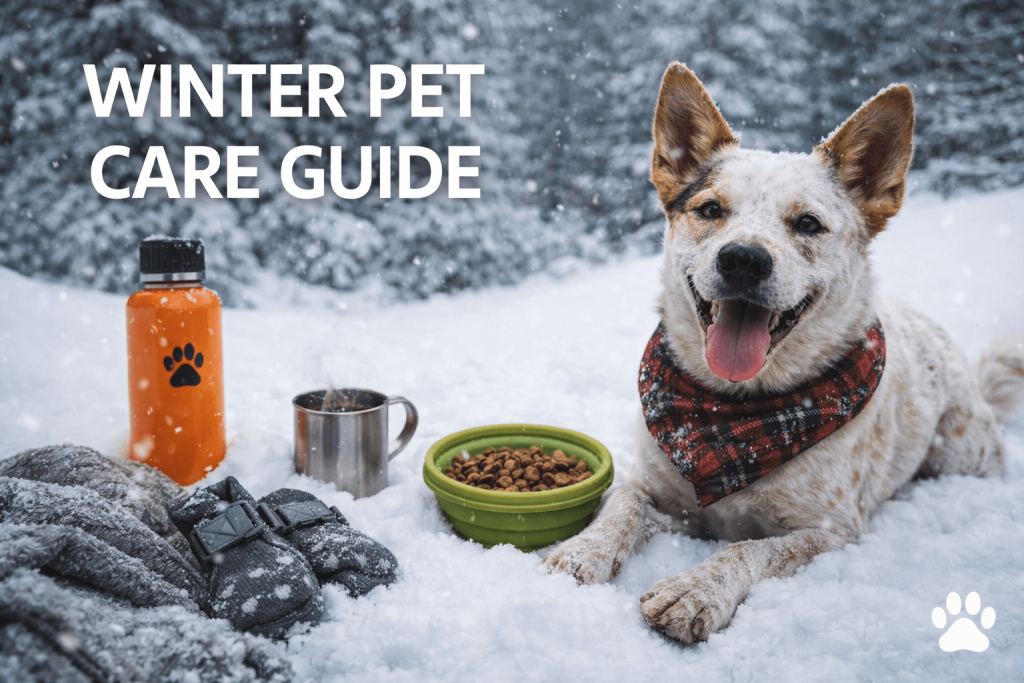
WINTER PET CARE GUIDE
1. Cold Weather Protection
Not all pets tolerate cold equally.
Small, short-haired, or senior pets may need:
- Sweaters or jackets
- Shorter outdoor exposure
- Warm bedding
Shivering is a sign your pet is too cold.
2. Paw and Skin Care
Cold weather dries skin and damages paws.
Protect paws from:
- Ice
- Snow
- De-icing chemicals
Use pet-safe paw balms and wipe paws after walks.
3. Winter Nutrition Needs
Some pets burn more calories staying warm.
Monitor:
- Weight changes
- Energy levels
Avoid overfeeding—adjust portions only if activity changes.
4. Indoor Mental Stimulation
Less outdoor time can cause boredom.
Provide:
- Puzzle toys
- Indoor training
- Interactive play
Mental stimulation prevents behavior issues.
Seasonal Grooming Adjustments
- Do not shave pets in summer—fur protects against heat
- Brush regularly year-round
- Reduce bathing frequency in winter
Seasonal Vet Care Checklist
- Summer: parasite prevention, hydration checks
- Winter: joint care, skin health, weight monitoring
Preventive care changes with seasons.
🎥 YouTube Video Suggestion:
Conclusion
Seasonal pet care is about awareness and adaptation. Small changes in routine can prevent serious health risks and ensure your pet stays comfortable year-round.