Vet Visit Checklist for New Pet Owners: What to Expect and How to Prepare
Introduction
Your pet’s first veterinary visit sets the foundation for lifelong health. For new pet owners, the process can feel intimidating—What should you bring? What questions should you ask? What will the vet check?
This comprehensive guide provides a step-by-step vet visit checklist so you can prepare confidently, reduce stress for your pet, and ensure nothing important is missed.
Why the First Vet Visit Is So Important
The initial appointment is not just about vaccinations. It establishes:
- A health baseline
- Preventive care planning
- Parasite control strategy
- Nutrition guidance
- Behavior and lifestyle assessment
Early veterinary care prevents costly and painful issues later.
When to Schedule the First Vet Visit
- Puppies & kittens: Within the first 3–7 days of bringing them home
- Adult rescue pets: As soon as adoption is complete
Do not delay—even if your pet appears healthy.
What to Bring to the Vet Appointment
Essential Documents
- Adoption or breeder paperwork
- Vaccination records (if available)
- Previous medical history
- Microchip information
Items for Comfort
- Secure carrier or leash
- Favorite toy or blanket
- Treats for positive reinforcement
Comfort items reduce anxiety significantly.
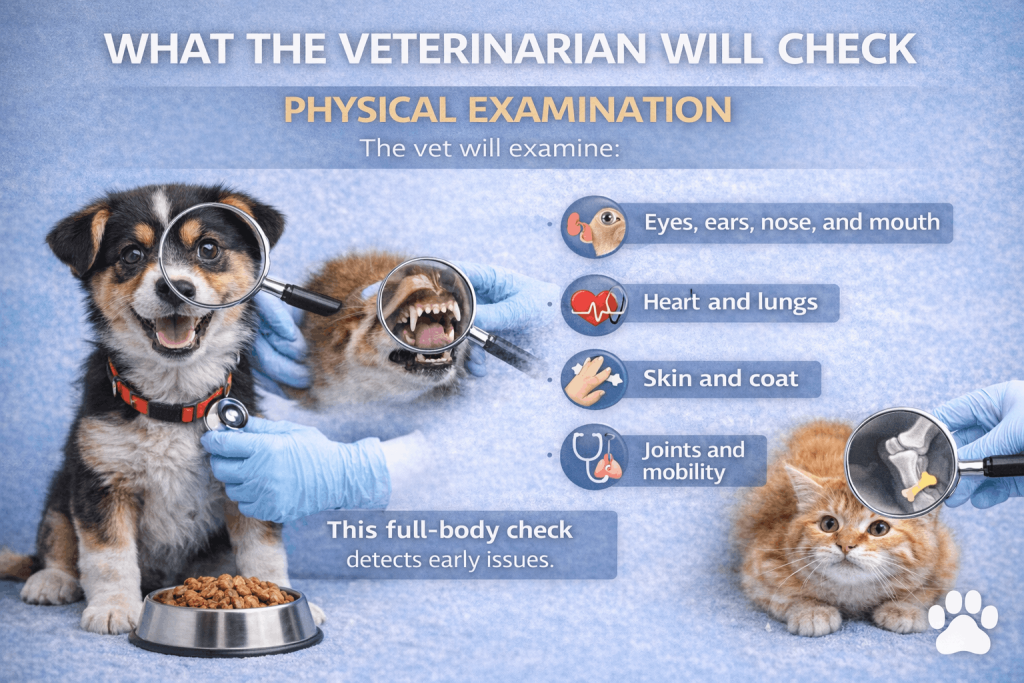
What the Veterinarian Will Check
Physical Examination
The vet will examine:
- Eyes, ears, nose, and mouth
- Teeth and gums
- Heart and lungs
- Skin and coat
- Joints and mobility
This full-body check detects early issues.
Weight and Body Condition
Your pet’s ideal weight will be assessed, helping guide:
- Feeding portions
- Exercise needs
- Growth expectations
Vaccination Review
The vet will:
- Review past vaccines
- Recommend core and non-core vaccines
- Set a booster schedule
Vaccinations are tailored to age, lifestyle, and location.
Parasite Screening
Expect guidance on:
- Flea and tick prevention
- Deworming schedules
- Heartworm prevention (where applicable)
Parasite control is essential—even for indoor pets.
Questions Every New Owner Should Ask
Prepare questions in advance to maximize the visit.
Ask about:
- Feeding recommendations
- Exercise needs
- Grooming frequency
- Behavioral concerns
- Emergency signs to watch for
No question is too small.
Nutrition and Feeding Guidance
Veterinarians can help you choose:
- Appropriate food type
- Correct portion sizes
- Feeding schedules
Avoid changing food without guidance.
Discussing Spay or Neuter Options
Your vet will explain:
- Best timing
- Health benefits
- Post-procedure care
Spaying or neutering supports population control and long-term health.
Microchipping and Identification
If not already done, microchipping may be recommended.
Benefits include:
- Permanent identification
- Increased recovery chances if lost
Always keep contact details updated.
How to Reduce Vet Visit Stress
- Schedule quiet appointment times
- Keep your tone calm
- Avoid forceful handling
- Reward calm behavior
Positive experiences make future visits easier.
After the Visit: What to Do Next
- Follow vaccination schedules
- Administer prescribed medications
- Monitor for mild vaccine reactions
- Schedule follow-up visits
Consistency is key.
🎥 YouTube Video Suggestion:
Conclusion
A prepared owner makes veterinary visits smoother and more effective. Your pet relies on you to advocate for their health—starting with that very first appointment.